
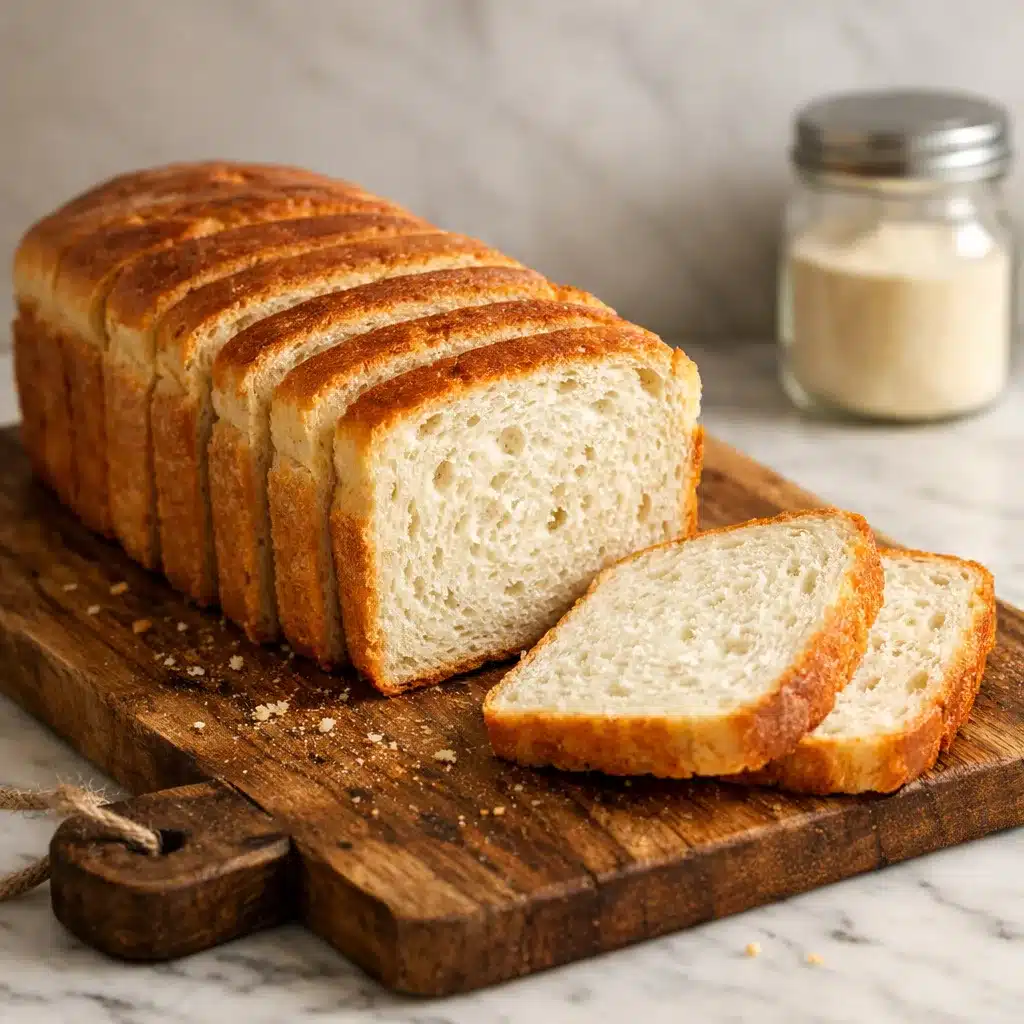
I have made a lot of gluten free bread over the years. Dense loaves that crumbled on the first slice. Gummy centers that never quite set. Crusts that looked beautiful in the oven and then sank the moment I set them on the cooling rack. And then I found the gelatin trick. Everything changed.
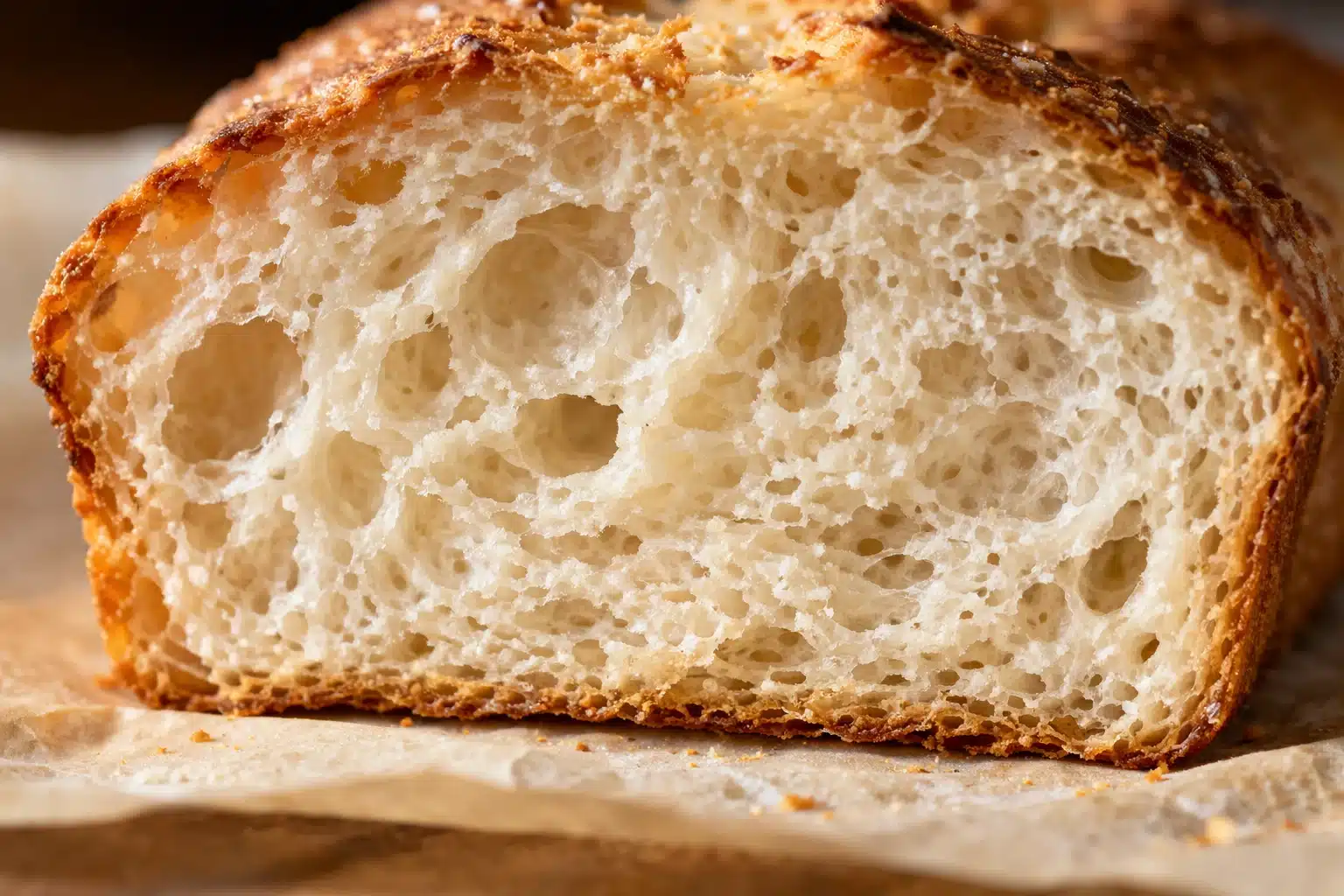
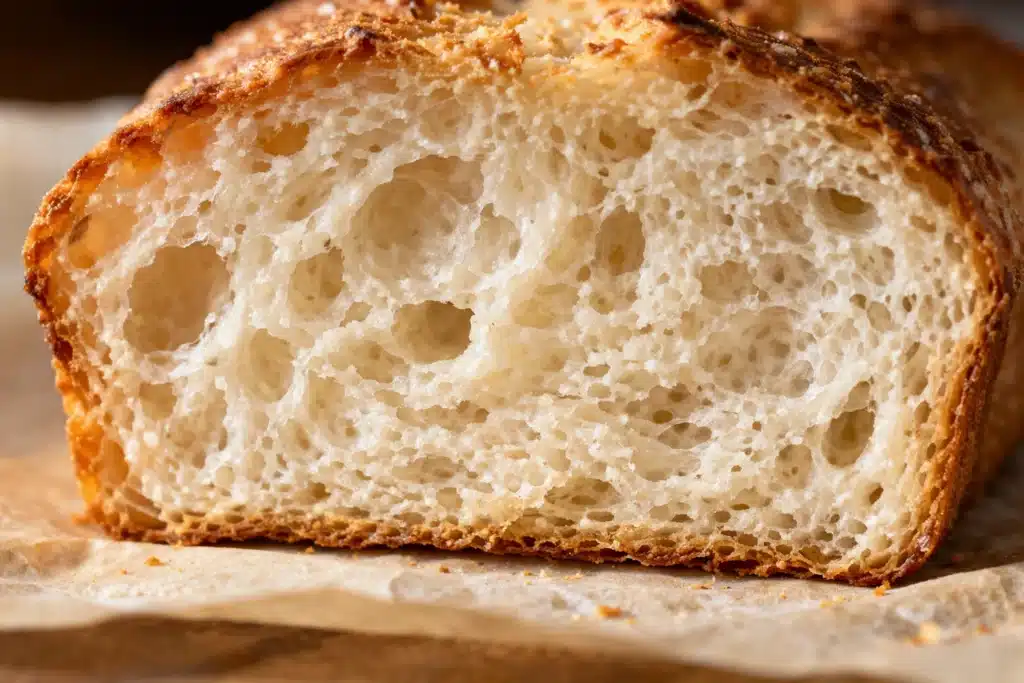
This gelatin trick gluten free bread recipe produces a sandwich loaf with a golden, crackling crust, a soft and chewy crumb, and — most importantly — slices that hold together. No crumbling. No collapsing. Just real bread that happens to be completely gluten free.
The gelatin trick gluten free bread recipe I am sharing today is the one I come back to every single week. It is based on a simple rice flour and tapioca starch blend, leavened with yeast, and enriched with eggs and a touch of olive oil. The gelatin is the secret ingredient that ties everything together — literally.
The same technique works just as beautifully in gelatin gluten free pizza dough, homemade gelatin gluten free pasta, and tall gelatin gluten free biscuits — every recipe in this series starts here.
Table of Contents
Table of Contents
Why This Gelatin Trick Gluten Free Bread Recipe Works
The gelatin trick gluten free bread recipe relies on a simple principle: gelatin forms a protein network in the dough that mimics the structural role of gluten. When wheat bread bakes, gluten traps gas bubbles and holds the crumb structure in place as it cools. Without gluten, that structure collapses — which is why so many gluten free loaves sink.
Unflavored gelatin dissolved in water and added to gluten free dough rebuilds that network. The collagen proteins in gelatin behave similarly to gluten — they stretch, hold gas, and set as the loaf cools. The result is a loaf that rises in the oven and stays risen on the cooling rack.
The other reason this recipe works so well is the flour combination. Rice flour gives the loaf body and a neutral flavor. Tapioca starch adds lightness and that slightly chewy quality you want in a sandwich bread. Together they create a base that the gelatin can work with effectively.
If you want to understand the full science behind this, read the complete gelatin trick gluten free guide — it covers every application from flaky gelatin gluten free pie crust to gelatin vs xanthan gum.
Gelatin Trick Gluten Free Bread Recipe — Ingredients
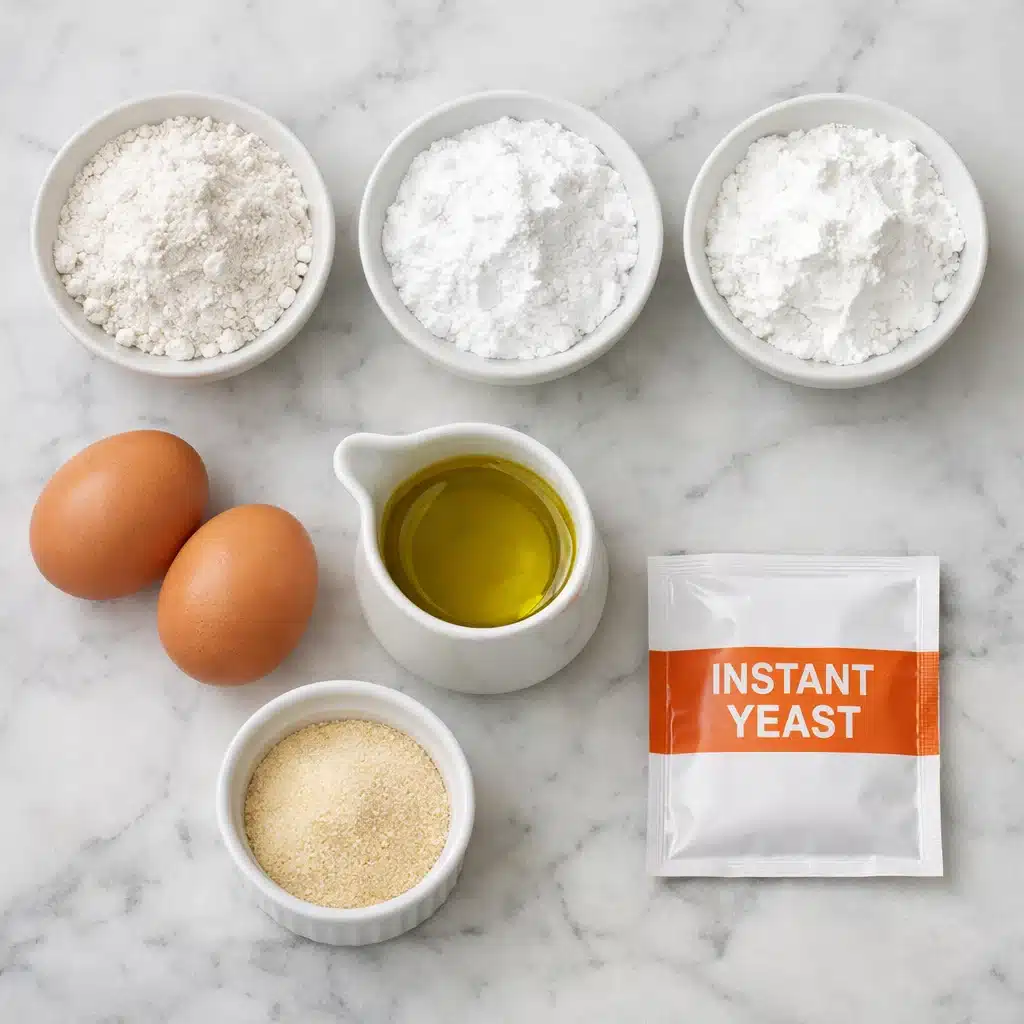
Here is everything you need for this gelatin trick gluten free bread recipe. All ingredients are easy to find at most grocery stores or online.
Dry Ingredients
- 2 cups white rice flour
- 1/2 cup tapioca starch
- 1/4 cup potato starch
- 2 teaspoons instant yeast
- 1 teaspoon fine sea salt
- 1 tablespoon granulated sugar
Wet Ingredients
- 2 large eggs, room temperature
- 3/4 cup warm water (110°F / 43°C)
- 3 tablespoons olive oil (or melted butter)
- 1 teaspoon apple cider vinegar
The Gelatin Trick
- 2 teaspoons unflavored gelatin powder (Knox, Vital Proteins, or Great Lakes)
- 2 tablespoons cold water (for blooming)
Ingredient Notes
Rice flour: Use white rice flour for a lighter, more neutral loaf. Brown rice flour works but gives a slightly denser crumb and earthier flavor.
Tapioca starch: Do not substitute with cornstarch here. Tapioca starch creates the characteristic chew and stretch that this recipe depends on.
Apple cider vinegar: This is not optional. The acid reacts with the baking leavening and helps create a lighter, more open crumb. It also improves shelf life.
Gelatin: Use exactly 2 teaspoons — 1 per cup of rice flour. This is the amount that gives you chew without turning the loaf rubbery.
Gelatin Trick Gluten Free Bread Recipe Card
Gelatin Trick Gluten Free Bread Recipe
Ingredients
Method
- Step 1: Bloom the gelatin
- Measure gelatin into a small ramekin.
- Add cold water, stir gently, rest 5 minutes
- until firm and spongy.
- Step 2: Activate the yeast
- Combine warm water, sugar, and yeast.
- Rest 5-10 minutes until foamy.
- Step 3: Melt the gelatin
- Microwave bloomed gelatin 10-15 seconds
- until liquid. Add immediately to eggs
- and olive oil. Whisk to combine.
- Step 4: Mix dough
- Whisk dry ingredients in large bowl.
- Add all wet ingredients. Mix with paddle
- attachment on medium speed 3 minutes.
- Step 5: First rise
- Transfer to greased 9×5 loaf pan.
- Smooth top with wet spatula.
- Cover and rise 45-60 minutes.
- Step 6: Bake
- Bake at 375°F for 35-40 minutes until
- internal temperature reaches 205°F.
- Step 7: Cool completely
- Cool on wire rack minimum 1 hour
- before slicing.
Notes
– Never slice before loaf cools completely (1 hour minimum)
– Bake to internal temperature 205°F — not by color alone
– Freeze sliced loaf for up to 3 months
– Read the complete gelatin trick guide at
thesavoryhearth.com/gelatin-trick-gluten-free
How to Make the Gelatin Trick Gluten Free Bread Recipe
Step 1: Bloom the Gelatin
The first step in this gelatin trick gluten free bread recipe is blooming the gelatin. Measure 2 teaspoons of unflavored gelatin powder into a small ramekin. Add 2 tablespoons of cold water. Stir gently just to combine, then leave undisturbed for exactly 5 minutes.
The gelatin will absorb all the water and transform into a firm, spongy mass. This is your bloomed gelatin. Do not skip this step or add the gelatin dry — it will not distribute evenly through the dough and you will end up with rubbery spots.
Sophia’s tip: Set a 5-minute timer the moment you add the water. Use those 5 minutes to measure and whisk your dry ingredients. By the time the timer goes off, your gelatin is ready and your flour blend is waiting.
Step 2: Activate the Yeast
In a small bowl, combine the warm water (110°F), sugar, and instant yeast. Stir gently and let sit for 5 to 10 minutes until foamy. If your yeast does not foam, it is expired — start over with fresh yeast. This step cannot be skipped.
Step 3: Melt the Bloomed Gelatin
In this gelatin trick gluten free bread recipe, the bloom needs to be melted before it meets the dough. Microwave the bloomed gelatin for 10 to 15 seconds until fully liquid and slightly steaming. It should be warm, not hot. Do not boil it.
Immediately add the melted gelatin to your eggs and olive oil. Whisk vigorously to combine — you want the gelatin distributed through the wet mixture before it has a chance to cool and re-solidify.
Step 4: Mix Wet and Dry Ingredients
Whisk together the rice flour, tapioca starch, potato starch, and salt in a large bowl. Make a well in the center. Pour in the yeast mixture, the egg and gelatin mixture, and the apple cider vinegar. Mix with a stand mixer fitted with a paddle attachment on medium speed for 3 minutes.
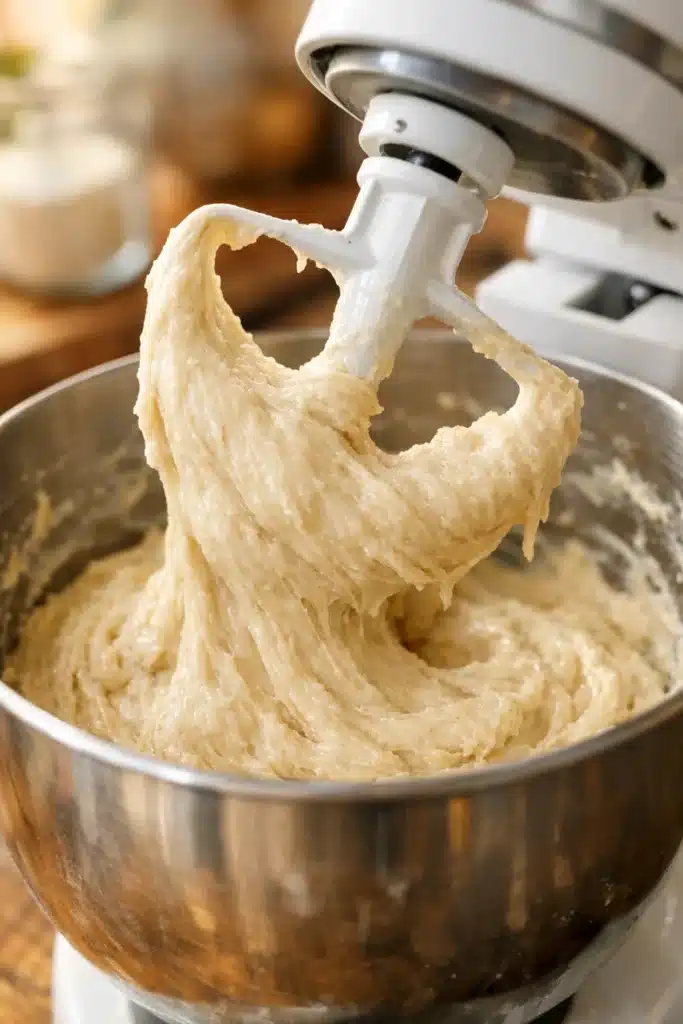
Gluten free bread dough is not like wheat dough. It will be thick, sticky, and more like a heavy batter than a traditional dough. This is correct. Do not add more flour trying to make it kneadable — that will make your loaf dense and dry.
Step 5: First Rise
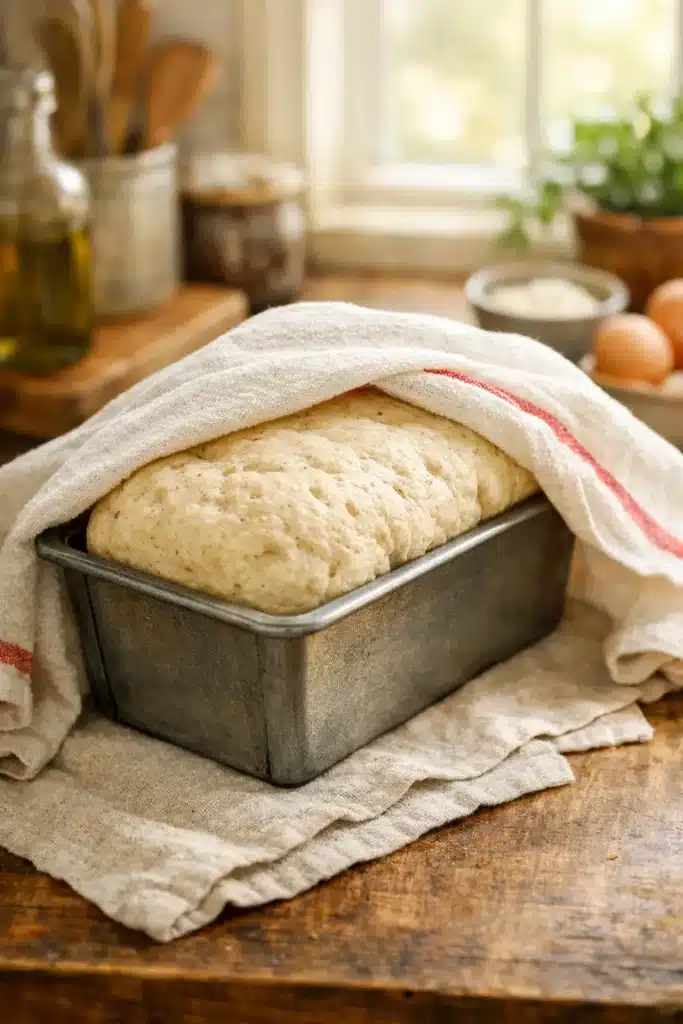
Your gelatin trick gluten free bread recipe dough should now be transferred to a greased 9×5 inch loaf pan. Smooth the top with a wet spatula or damp fingers. Cover loosely with plastic wrap or a clean kitchen towel.
Let rise in a warm, draft-free spot for 45 to 60 minutes. The dough should rise to about 1 inch above the rim of the pan. Gluten free dough rises more slowly than wheat dough, so do not rush this step.
Warm rising tip: If your kitchen is cold, place the loaf pan in the oven with just the oven light on. The light generates just enough warmth to activate the yeast without overproofing.
Step 6: Bake
Preheat your oven to 375°F (190°C). Once the dough has risen, remove the plastic wrap and bake for 35 to 40 minutes. The loaf is done when the top is deep golden brown and an instant-read thermometer inserted into the center reads 205°F (96°C).
Do not pull the loaf early because it looks done on top. Gluten free bread needs to reach that internal temperature to set the crumb properly. Underbaking is the number one cause of a gummy center.
Step 7: Cool Completely
This step is non-negotiable. Transfer the loaf to a wire rack and cool for a minimum of 1 hour before slicing. Cutting into a hot gluten free loaf releases the steam that is still setting the crumb — you will get a gummy, collapsed interior if you slice too soon.
The gelatin network finishes setting as the loaf cools. By the time your loaf is fully cooled, the crumb will be stable, sliceable, and chewy in exactly the right way.
Expert Tips for the Best Gelatin Trick Gluten Free Bread Recipe
Every gelatin trick gluten free bread recipe benefits from these techniques, whether you are a first-time gluten free baker or someone who has been at it for years.
- Use a kitchen scale for the flour. Gluten free flours compact easily in measuring cups — weighing ensures consistent results every time.
- Room temperature eggs. Cold eggs can cause the melted gelatin to set prematurely when combined. Take them out of the fridge 30 minutes before baking.
- Wet your hands when shaping. Gluten free dough is sticky. A little water on your hands or spatula makes shaping the top of the loaf much easier.
- Check your yeast first. Old or inactive yeast is the most common reason gluten free bread does not rise. Always proof your yeast before adding it to the dough.
- Do not open the oven in the first 25 minutes. Temperature fluctuations during the first part of baking can cause the loaf to collapse. Resist the urge.
- Cool on a wire rack, not the pan. Leaving the loaf in the hot pan after baking steams the bottom and makes it soggy.
Gelatin Trick Gluten Free Bread Recipe Variations
This gelatin trick gluten free bread recipe base is flexible and adapts beautifully to different flavors and styles.
Dairy Free Version
This recipe is already dairy free when made with olive oil. For a richer flavor, substitute the olive oil with melted coconut oil or vegan butter. The gelatin trick works identically in both versions.
Egg Free Version
Replace each egg with a flax egg (1 tablespoon ground flaxseed + 3 tablespoons water, rested 5 minutes). The loaf will be slightly denser and the crust will not brown as deeply, but the gelatin trick will still provide good structure.
Herb and Garlic Loaf
Add 1 teaspoon garlic powder, 1 teaspoon dried rosemary, and 1/2 teaspoon dried thyme to your dry ingredients. This variation is spectacular sliced and toasted alongside soup or salad.
Seeded Crust
Before baking, brush the top of the risen loaf with a beaten egg or olive oil and press sesame seeds, poppy seeds, or sunflower seeds into the surface. The seeds toast during baking and add flavor and visual appeal.
Storing Your Gelatin Trick Gluten Free Bread Recipe Results
Once your gelatin trick gluten free bread recipe loaf has cooled completely, here is how to keep it at its best.
Room Temperature
Store in an airtight container or resealable bag at room temperature for up to 2 days. Gluten free bread stales faster than wheat bread — the gelatin trick helps retain moisture longer than most recipes, but it is still best within 48 hours.
Refrigerator
Wrap tightly and refrigerate for up to 5 days. Gluten free bread can become slightly firm in the fridge — toast slices before eating to restore softness.
Freezer
This loaf freezes beautifully. Slice the entire loaf, place parchment between slices, and freeze in a resealable bag for up to 3 months. Pull out individual slices and toast directly from frozen — no thawing needed.
Gelatin Trick Gluten Free Bread Recipe — Troubleshooting
The most common gelatin trick gluten free bread recipe issue is a loaf that looks perfect outside but has a gummy, dense center. Here is how to diagnose and fix the most frequent problems.
Loaf Did Not Rise
Almost always caused by inactive yeast. Check the expiry date and always proof your yeast in warm water with sugar first. If it does not foam after 10 minutes, replace it.
Loaf Collapsed After Baking
Two possible causes: underbaking (center was not set — use a thermometer and bake to 205°F) or slicing too soon (always cool a minimum of 1 hour). The gelatin trick prevents most collapsing, but these errors can still override it.
Gummy Center
Underbaking. Every time. The internal temperature must reach 205°F. If your oven runs cool, add 5 minutes and check again.
Rubbery Texture
Too much gelatin. Reduce by 1/4 teaspoon and try again. Also check that your gelatin was fully bloomed and melted before adding — clumps of underhydrated gelatin can create rubbery pockets.
Crust Too Hard
Overbaking. Check your oven temperature with an oven thermometer — many ovens run 25°F hotter than the dial indicates. Reduce temperature by 10 to 15°F and monitor closely.
Frequently Asked Questions
Is this gelatin trick gluten free bread recipe beginner friendly?
Yes, this gelatin trick gluten free bread recipe is designed for home bakers at all levels. The steps are straightforward, the ingredients are easy to find, and the gelatin trick itself takes less than 5 minutes to prepare. If you can follow a recipe, you can make this bread.
Can I make this gelatin trick gluten free bread recipe dairy free?
Yes — this recipe is already dairy free when made with olive oil instead of butter. Every ingredient in the base recipe is naturally dairy free. No substitutions needed.
Why did my gelatin trick gluten free bread recipe collapse?
If your gelatin trick gluten free bread recipe collapsed after baking, the two most likely causes are underbaking (always use a thermometer, bake to 205°F) or slicing before the loaf was fully cooled (minimum 1 hour on a wire rack).
Can I use a bread machine for this recipe?
You can use the dough cycle of a bread machine to mix and do the first rise, then transfer to a loaf pan for the second rise and baking. Do not bake in the bread machine — the shape and heat distribution will give you uneven results.
What is the best gluten free flour blend for this recipe?
The rice flour and tapioca starch combination in this recipe is specifically chosen to work well with the gelatin trick. Commercial all-purpose gluten free blends can work, but results vary by brand. Bob’s Red Mill 1-to-1 and King Arthur Measure for Measure are both reliable options if substituting.
Final Thoughts from Sophia
I have made this loaf more times than I can count. It is my Tuesday sandwich bread, my Friday toast, my Sunday soup companion. It is the recipe I send to friends who are newly gluten free and feeling overwhelmed. It is proof that gluten free bread does not have to be a compromise.
This gelatin trick gluten free bread recipe is the one I keep coming back to because it works, every single time, with ingredients that are easy to find and a method that is genuinely manageable for a home cook. The gelatin trick is not a gimmick — it is science applied simply.
Every time I make this gelatin trick gluten free bread recipe, I think about all the loaves before it that collapsed, crumbled, or went straight into the bin. This is not that loaf. This is the one that stays.
If you try it, I want to hear about it. Leave a rating and a comment below — and if something went wrong, tell me that too. We will figure it out together.
This recipe has also been featured on Foodgawker — one of the largest food photography communities on the web.
Happy baking. — Sophia Bennett, The Savory Heart