
The Southern kitchen has always known cottage cheese. Long before TikTok discovered it, long before “high-protein everything” became a personality trait, my grandmother kept a container of it in her Frigidaire year-round — right next to the sweet tea and the leftover cornbread. She’d spoon it over sliced summer tomatoes for lunch, fold it into her breakfast pancakes when the ricotta ran out, and swore it made her biscuits rise higher than anyone else’s at church potluck. She was right about all of it — and every one of the gluten-free cottage cheese recipes below traces back to something she taught me.
What’s changed in 2026 isn’t the ingredient — it’s how the rest of the country finally caught up. Gluten-free cottage cheese recipes are showing up everywhere: gym girls mixing it into protein bowls, wellness accounts calling it “nature’s Ozempic,” TikTok bakers turning it into everything from egg bites to ice cream. But for anyone cooking gluten-free — especially anyone trying to keep that Southern comfort feeling alive — cottage cheese isn’t a trend. It’s a quiet workhorse that’s been waiting for a spotlight it always deserved.
This complete guide to gluten-free cottage cheese recipes brings together everything I’ve learned over fifteen years of cooking gluten-free in a Southern kitchen: seven gluten-free cottage cheese recipes that actually work (no dense, gummy disappointments), how to pick the right cottage cheese for baking, the substitution tricks that unlock Southern classics, and the honest answers to the questions everyone asks about protein, weight loss, and whether cottage cheese is actually gluten-free (short answer: mostly yes, with two important exceptions). Let’s cook.
Table of Contents
Table of Contents
Why Cottage Cheese Deserves the Trend
Nutrition first, then the cooking. The reason gluten-free cottage cheese recipes work so well starts with the ingredient itself — cottage cheese hits an unusual triple: it’s high in protein (about 24 grams per cup of low-fat), naturally low in carbohydrates (roughly 6 grams per cup), and — the part that matters for Southern cooking — it has a texture that works in savory dishes, sweet dishes, and baked goods without needing to be masked. Not many ingredients pull that off.
The protein in cottage cheese is mostly slow-digesting casein, which is why it fills you up longer than the same amount of protein from chicken or eggs. That’s the whole reason gluten-free cottage cheese recipes have become the “have a bowl at 9 p.m. so you’re not raiding the pantry at midnight” food of choice for anyone counting macros. But casein has another quality that matters more for gluten-free bakers: it holds moisture.
Traditional gluten-free flour blends dry out fast. They pull moisture from everything around them, which is why so many gluten-free biscuits taste like sawdust by day two. Cottage cheese — folded into batter or dough — gives that moisture back slowly, keeping baked goods tender for days. That’s the entire trick behind every one of the gluten-free cottage cheese recipes below, and it’s the same trick behind the gelatin trick gluten-free baking approach my grandmother would have loved if she’d known about it.
Cottage cheese also does something Greek yogurt doesn’t — and it’s why baked gluten-free cottage cheese recipes have taken over TikTok: it browns beautifully. The curds — especially small curd — caramelize just enough at the edges of a baked dish to give you the crispy corners that Southern cooking lives for. That’s why baked cottage cheese recipes have exploded on TikTok and why every recipe below leans on that browning to do half the flavor work.
Cottage Cheese Nutrition Facts
Before we get into the gluten-free cottage cheese recipes themselves, here’s what you’re actually eating per standard serving:
| Nutrient | Per ½ Cup Low-Fat | Per 1 Cup Low-Fat | Per 1 Cup Whole Milk |
| Calories | 90 | 180 | 220 |
| Protein | 12 g | 24 g | 23 g |
| Total Fat | 2 g | 4 g | 10 g |
| Saturated Fat | 1 g | 2 g | 6 g |
| Carbohydrates | 3 g | 6 g | 8 g |
| Sugars (natural) | 3 g | 6 g | 8 g |
| Sodium | 340 mg | 680 mg | 620 mg |
| Calcium | 10% DV | 20% DV | 20% DV |
The sodium is worth flagging: cottage cheese runs high on sodium, so if you’re watching salt, look for the “low sodium” versions (they cut about 50%). Everything else is a straight nutritional win.
How to Pick the Best Cottage Cheese for Gluten-Free Cooking
Not all cottage cheese behaves the same in gluten-free cottage cheese recipes. Three variables matter more than the rest.
Fat content: whole milk vs. low-fat vs. non-fat. For baking in gluten-free cottage cheese recipes (biscuits, cornbread, pancakes), whole milk cottage cheese is non-negotiable — the extra fat carries flavor and prevents the gummy texture that plagues gluten-free bakes. For breakfast bowls, salads, and anything you eat cold, low-fat works fine. Skip non-fat entirely; the texture is chalky and the flavor is thin.
Curd size: small curd vs. large curd. Small curd blends smoothly for batters and fillings — that’s what you want for cornbread, pancakes, and cheesecakes. Large curd has more texture and personality, which shines in cottage cheese bowls, salads, and anything served straight. When in doubt, small curd is the safer default for gluten-free cottage cheese recipes because it distributes evenly through gluten-free flour blends without leaving pockets of dry starch.
Certified gluten-free labeling. The good news for anyone building a rotation of gluten-free cottage cheese recipes: plain cottage cheese should be naturally gluten-free — it’s just milk, cream, salt, and cultures. But two things can sneak gluten in: modified food starch (some brands use wheat-derived starch as a thickener) and shared production lines. To be safe, check for the certified gluten-free label on the container. The two brands I trust most for gluten-free baking are Good Culture (whole milk, small curd, live cultures) and Nancy’s Probiotic (prebiotic-rich cultures, clean ingredient list). Daisy is also reliable and easier to find at most grocery stores.
The 7 Best Gluten-Free Cottage Cheese Recipes
Once you’ve picked the right cottage cheese, these seven gluten-free cottage cheese recipes cover every meal of the day and every occasion — breakfast, lunch, side dish, holiday table. Each one has been tested until it’s foolproof, and each one leans on cottage cheese to deliver something gluten-free cooking usually struggles with: tenderness, protein, and comfort.
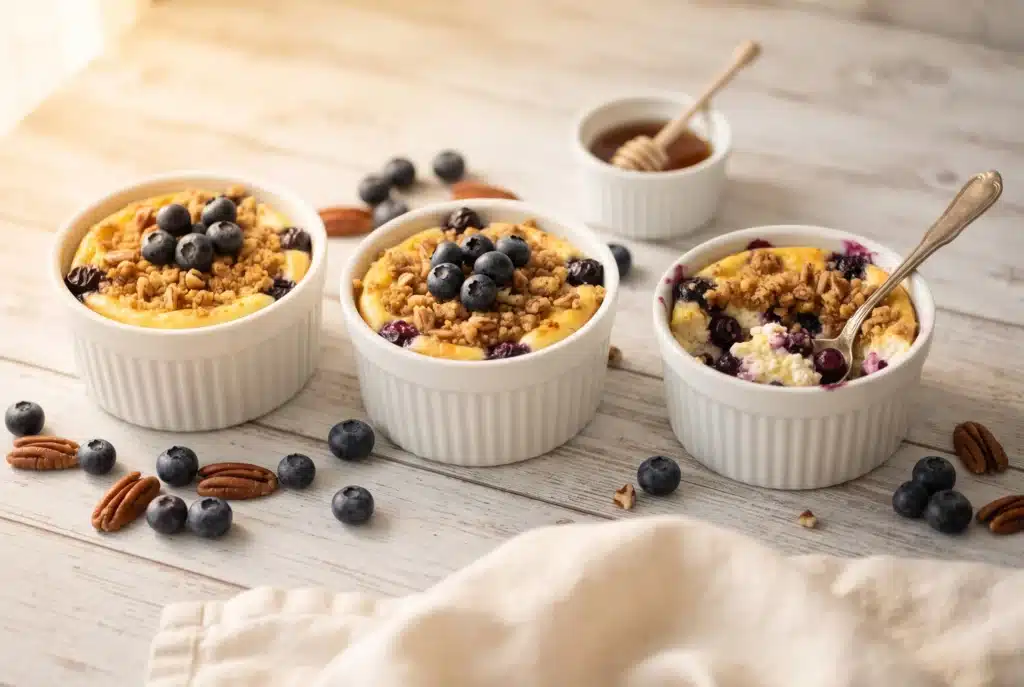
1. Baked Blueberry Cottage Cheese Breakfast Bowls with Pecan Crumble
This is the gluten-free cottage cheese recipe everyone’s making right now — cottage cheese blended smooth with eggs and a little maple syrup, poured into ramekins, topped with fresh blueberries and a buttery gluten-free pecan crumble, then baked until set and golden. It’s what happens when a viral TikTok breakfast bowl meets a Georgia grandmother’s fruit cobbler instinct. Twenty-two grams of protein per serving, ready in 30 minutes, and it holds in the fridge for four days.
Key ingredients: whole milk cottage cheese, eggs, maple syrup, fresh blueberries, gluten-free oats (certified GF), pecans, brown sugar, butter, cinnamon.
Best for: meal prep, high-protein breakfast, entertaining brunch. Why it works: one of the most reliable gluten-free cottage cheese recipes for texture — the eggs and cottage cheese set into a custard that holds for days.
2. Gluten-Free Cottage Cheese Cornbread
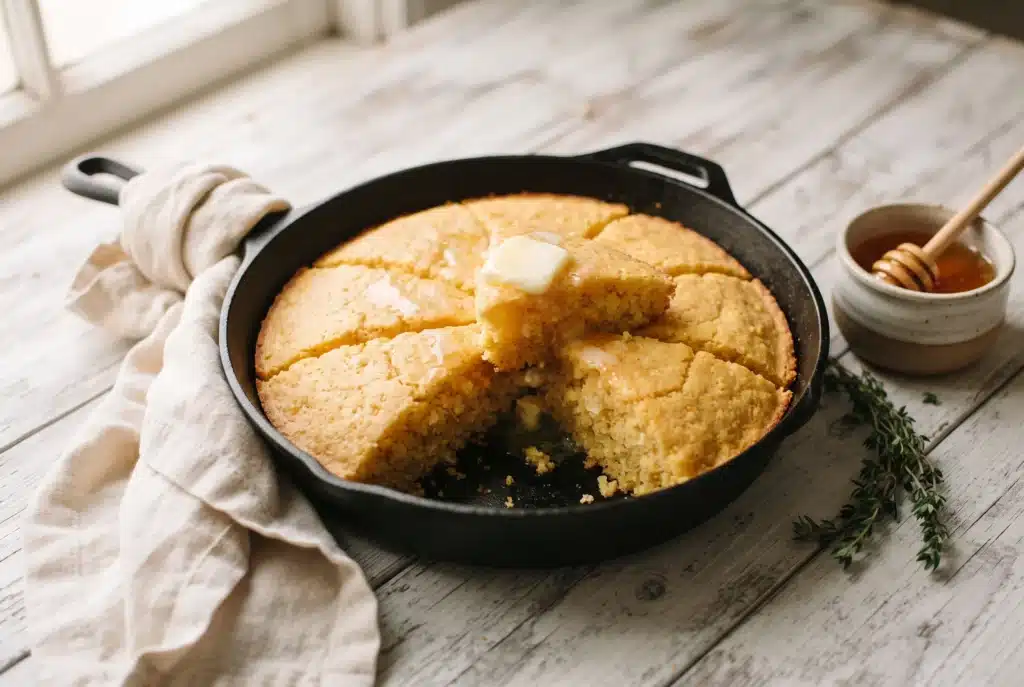
Cornbread is the hardest Southern classic to nail gluten-free. Most gluten-free cornbread comes out crumbly, dry, and joyless. Cottage cheese fixes it — the curds melt into pockets of tender richness, and the extra moisture keeps this cornbread tender for three days. Serve it with chili, with greens, or with nothing but a knob of butter and a drizzle of honey. This is one of the most tested gluten-free cottage cheese recipes in my rotation — a cornbread I’ve been making for a decade.
Key ingredients: gluten-free cornmeal, gluten-free flour blend, cottage cheese (whole milk, small curd), buttermilk, eggs, butter, honey, baking powder, salt.
Best for: Southern dinner sides, chili nights, holiday tables. Why it works: the crown jewel of gluten-free cottage cheese recipes for anyone who’s given up on gluten-free cornbread.
3. Cottage Cheese Buttermilk Pancakes (Gluten-Free)
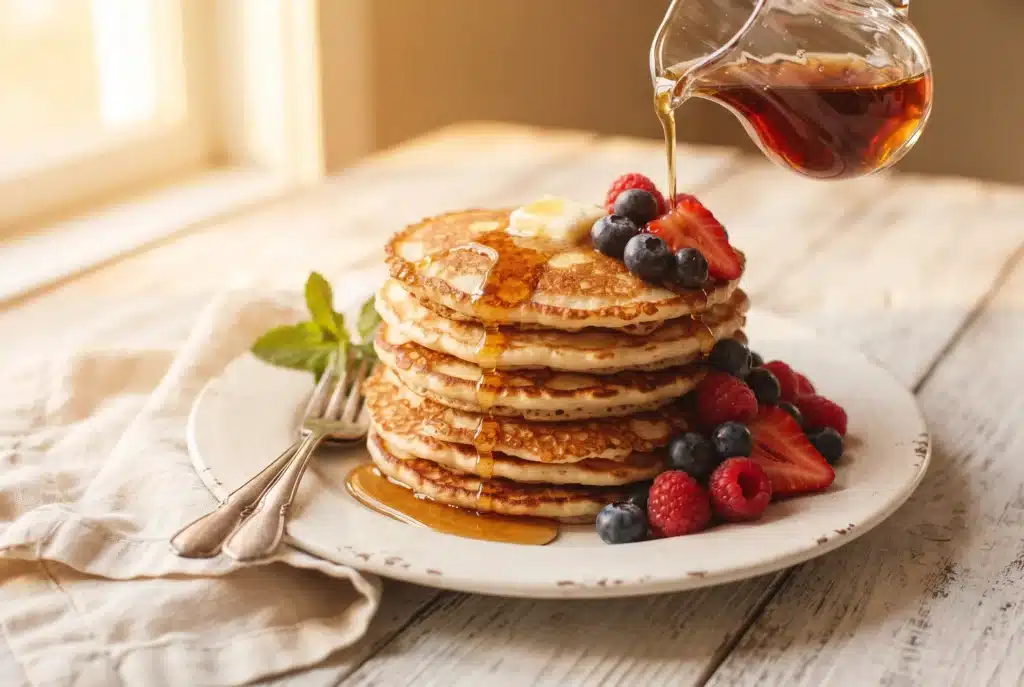
Of all the gluten-free cottage cheese recipes here, these pancakes are the easiest starting point — they taste like the ones I grew up eating at the Southern diner on Saturday mornings — tall, fluffy, tangy from the buttermilk, and rich enough that you don’t reach for syrup automatically. The cottage cheese adds 20 grams of protein per stack while making the pancakes lighter, not heavier. Small curd blended into the batter is the move.
Key ingredients: gluten-free flour blend, cottage cheese (small curd, blended), buttermilk, eggs, butter, sugar, baking powder, baking soda, vanilla.
Best for: weekend breakfast, high-protein mornings, kids who need convincing to eat cottage cheese. Why it works: one of the fluffiest gluten-free cottage cheese recipes on this site — the buttermilk and cottage cheese together create real lift.
4. High-Protein Cottage Cheese Egg Bites (Southern-Style)
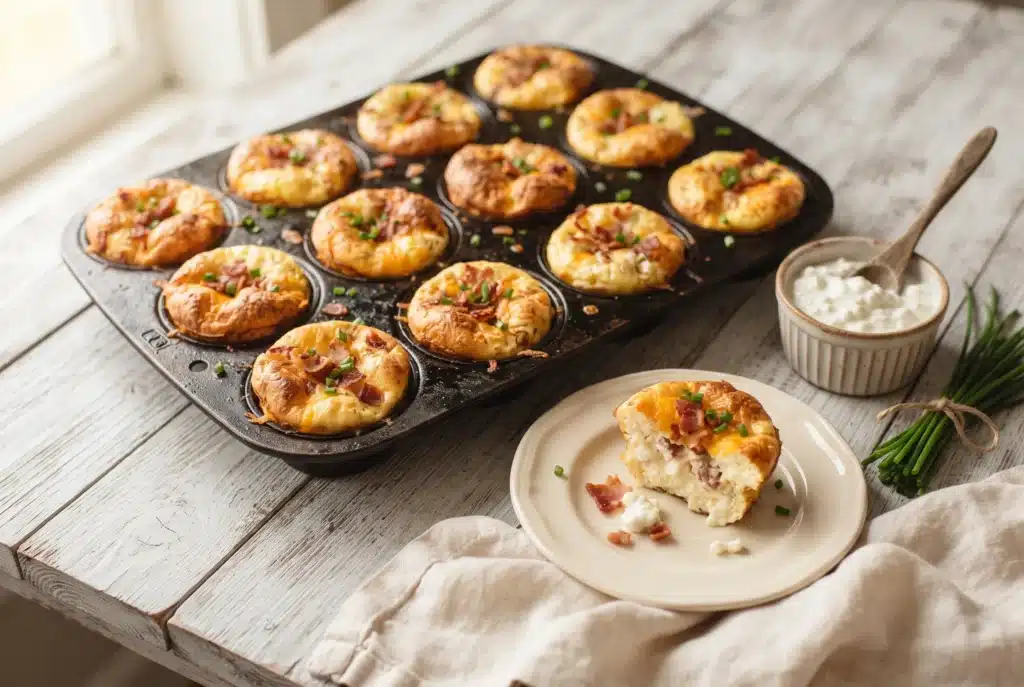
These are what happens when Starbucks’ famous egg bites meet a Southern breakfast plate — and they’re consistently the most-saved of my gluten-free cottage cheese recipes. Cottage cheese blended with eggs, sharp cheddar, chives, and crumbled bacon (optional), baked in a muffin tin until puffed and golden. Each bite has 8 grams of protein, holds in the fridge for five days, and reheats in 30 seconds. This is the gluten-free breakfast meal prep recipe I’ve made every Sunday for three years.
Key ingredients: eggs, whole milk cottage cheese, sharp cheddar cheese, chives, cooked bacon (optional), salt, pepper, hot sauce.
Best for: Sunday meal prep, on-the-go breakfast, high-protein snacks.
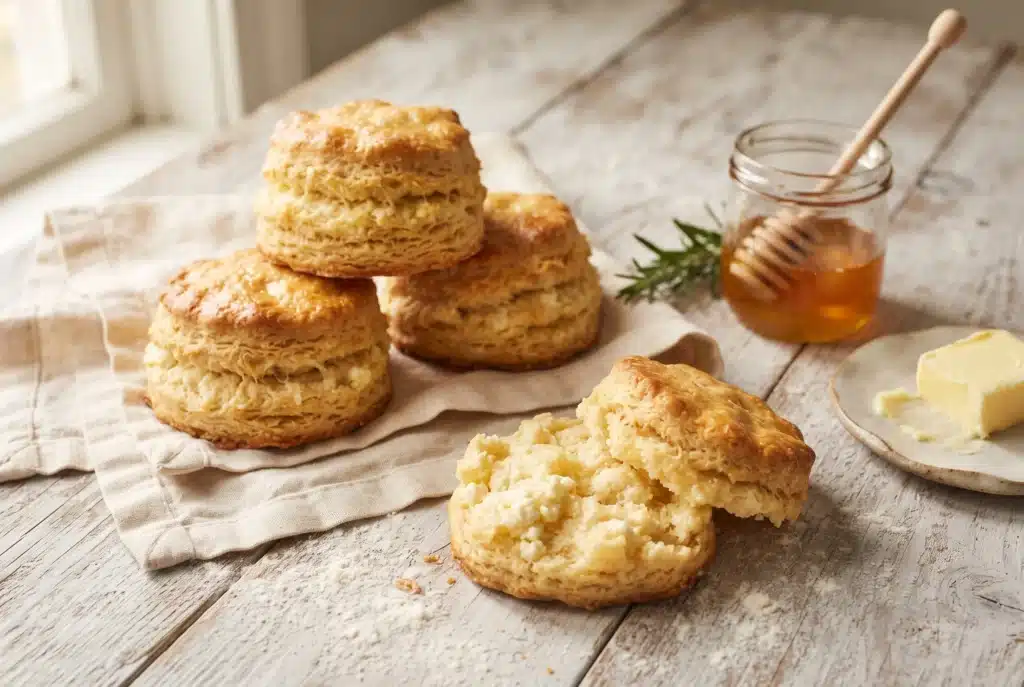
5. Gluten-Free Cottage Cheese Biscuits
For anyone who’s ever bitten into a gluten-free biscuit and felt genuine disappointment, this is the gluten-free cottage cheese recipe that changes the ceiling. Cottage cheese folded into a gluten-free biscuit dough delivers what gluten-free baking usually can’t: layers, tenderness, and biscuits that stay soft on day two. My grandmother’s Southern buttermilk biscuits were the standard I chased for a decade of gluten-free failures. Cottage cheese finally got me there.
Key ingredients: gluten-free flour blend, cottage cheese (whole milk, small curd), cold butter, buttermilk, baking powder, sugar, salt.
Best for: biscuits and gravy mornings, holiday breakfast, dinner rolls. Why it works: the recipe that convinced me gluten-free cottage cheese recipes could deliver actual layers, not just texture.
6. Cottage Cheese Chicken Salad (Southern-Style)
This is my grandmother’s chicken salad recipe, quietly modernized — one of the coldest, easiest gluten-free cottage cheese recipes on this list. She used all mayonnaise; I use half mayonnaise and half cottage cheese blended smooth. The result is lighter, higher in protein, and — somehow — tastes more like hers than the original. Serve on lettuce, in a lettuce wrap, or over gluten-free crackers. Pairs beautifully with our Southern smothered chicken approach on nights you need something cooler.
Key ingredients: cooked chicken breast, cottage cheese (small curd, blended smooth), mayonnaise, celery, green onion, sweet pickle, Dijon mustard, salt, pepper, fresh dill.
Best for: lunch meal prep, ladies’ luncheons, high-protein cold plates. Why it works: one of the few no-cook gluten-free cottage cheese recipes on this list — perfect for summer.
7. Cottage Cheese Sweet Potato Casserole
The Southern sweet potato casserole tradition — pecan streusel, marshmallows, brown sugar — reworked for anyone who wants the holiday flavor without the sugar crash. This is the recipe that convinced me gluten-free cottage cheese recipes belong on the Thanksgiving table. Cottage cheese folded into the sweet potato base adds creaminess and 12 grams of protein per serving. The pecan streusel on top stays fully gluten-free. This is the recipe I bring to my sister’s Thanksgiving now, and no one has noticed the swap.
Key ingredients: sweet potatoes, cottage cheese (whole milk, blended smooth), eggs, brown sugar, butter, vanilla, cinnamon, pecans, gluten-free oats, salt.
Best for: holiday tables, potlucks, meal prep sides. Why it works: proof that gluten-free cottage cheese recipes can hold their own on the Thanksgiving table.
Common Cottage Cheese Mistakes (and How to Fix Them)
Even the best gluten-free cottage cheese recipes fail if you miss the fundamentals. Five mistakes to avoid.
Not draining excess whey. Cottage cheese sitting in whey behaves like a wet ingredient. For baking recipes — especially the biscuits and cornbread — drain the cottage cheese in a fine mesh sieve for 10 minutes before measuring. This is the single biggest fix for gluten-free cottage cheese recipes turning out gummy.
Using low-fat when whole is called for. Whole milk cottage cheese is not interchangeable with low-fat in baked goods. The fat is what carries flavor and keeps the crumb tender. For breakfast bowls and salads, low-fat is fine. For anything going in the oven, use whole.
Not blending when the recipe says to blend. When a gluten-free cottage cheese recipe calls for cottage cheese blended smooth (pancakes, chicken salad, sweet potato casserole), skip that step and you get pockets of curds where you wanted uniformity. A quick 30 seconds in a food processor is the whole fix.
Adding cold cottage cheese to hot sauces. Cottage cheese will curdle if you dump it straight from the fridge into a hot pan. If a recipe uses it in a warm dish, let it come to room temperature first, or temper it with a spoonful of the warm liquid before adding.
Ignoring the sodium. Cottage cheese runs high on sodium (up to 700 mg per cup). If you’re building gluten-free cottage cheese recipes that also use cheese or bacon, cut the added salt in half and taste before adjusting.
Cottage Cheese Substitutions for Southern Cooking
Once you’ve mastered the seven gluten-free cottage cheese recipes above, cottage cheese starts pulling double duty as a substitute in classic Southern dishes.
Replacing ricotta. For anyone expanding beyond the seven gluten-free cottage cheese recipes above, cottage cheese blended smooth is a 1:1 replacement for ricotta in almost everything — lasagna, cheesecakes, stuffed shells. The flavor is slightly tangier, which most people prefer.
Replacing sour cream. For dips and dressings, cottage cheese blended smooth with a little lemon juice replaces sour cream at half the calories and double the protein. Not for hot sauces (curdling risk).
Replacing cream cheese in baking. Cottage cheese doesn’t fully replace cream cheese — it’s less rich and less spreadable — but for savory cheesecakes or breakfast bakes where the cream cheese is folded into a batter, you can swap 3/4 cottage cheese + 1/4 cream cheese for a full cream cheese amount and cut significant calories.
Replacing Greek yogurt. For sweet applications, cottage cheese blended smooth with a little honey or maple syrup is a straight swap for Greek yogurt with roughly the same protein. The texture is silkier if you blend well.
Cottage Cheese for Weight Loss and High-Protein Eating
Cottage cheese — and by extension the gluten-free cottage cheese recipes built around it — has quietly become the darling of anyone doing high-protein weight loss, and the reason is simple math: 24 grams of protein for 180 calories in a cup of low-fat is one of the best protein-to-calorie ratios of any food. It’s why gluten-free cottage cheese recipes have moved from a niche interest to a mainstream weight loss staple.
The casein protein digests slowly (over 4 to 6 hours), which is what makes cottage cheese famously good as a bedtime snack — it delivers a steady stream of amino acids overnight while you sleep. For anyone building or preserving muscle on a weight loss diet, that overnight protein window matters.
For anyone on a GLP-1 medication (Ozempic, Wegovy, Mounjaro), gluten-free cottage cheese recipes are even more useful. GLP-1s suppress appetite so effectively that many users struggle to hit protein targets in whole food form. A half-cup of cottage cheese delivers 12 grams of protein in a tolerable serving size that goes down easy even on a suppressed appetite.
Practical guidance for building gluten-free cottage cheese recipes into a weight loss routine: two servings of cottage cheese per day (one at breakfast, one at bedtime) can add 24 to 48 grams of high-quality protein to a weight loss diet without adding much calorie load. Any of the seven gluten-free cottage cheese recipes above fits into that pattern without feeling like a diet food.
Frequently Asked Questions
Is cottage cheese gluten-free?
Plain cottage cheese is naturally gluten-free, which is what makes gluten-free cottage cheese recipes so accessible — the ingredients in the cottage cheese itself are just milk, cream, cultures, and salt. Two exceptions: some brands use modified food starch (occasionally wheat-derived) as a thickener, and shared production lines can cause cross-contamination. For celiacs and anyone highly sensitive, look for the certified gluten-free label. Good Culture, Nancy’s, and Daisy are reliable gluten-free options.
Can you bake with cottage cheese?
Yes — and it’s especially good in gluten-free baking, which is why gluten-free cottage cheese recipes have taken off. Cottage cheese adds moisture, protein, and a subtle tang without changing the flavor of most recipes. It’s a hero ingredient in gluten-free biscuits, cornbread, pancakes, and cheesecakes. For baked applications, use whole milk small curd cottage cheese and drain any excess whey before measuring.
Is full-fat or low-fat cottage cheese better for gluten-free recipes?
For baking in gluten-free cottage cheese recipes, always full-fat (whole milk). The extra fat is what keeps gluten-free baked goods tender and flavorful. For breakfast bowls, salads, chicken salad, and anything you eat cold, low-fat works fine and cuts calories without sacrificing texture. Skip non-fat — the texture is chalky and the flavor is thin.
How long does cottage cheese last in the fridge?
Unopened, cottage cheese lasts about 1 to 2 weeks past the printed date if kept cold. Once opened, use within 5 to 7 days for the best flavor and texture. Signs it’s gone: sour smell (beyond its normal tang), yellowing, or watery separation that doesn’t stir back in.
Can you freeze cottage cheese?
Yes, but the texture changes — frozen and thawed cottage cheese gets grainy and watery, which makes it unsuitable for eating straight but perfectly fine for baking in gluten-free cottage cheese recipes. If you’re going to freeze it, plan to use it in cornbread, pancakes, biscuits, or casseroles where the texture change doesn’t matter.
Is cottage cheese good for weight loss?
Yes — cottage cheese is one of the highest protein-to-calorie foods available. A cup of low-fat cottage cheese has 24 grams of protein for 180 calories, and the slow-digesting casein protein keeps you full for hours. It’s an excellent food for high-protein weight loss diets and especially useful for anyone on a GLP-1 medication struggling to hit protein targets.
What’s the difference between cottage cheese and ricotta?
Ricotta is smoother, sweeter, and lower in sodium. Cottage cheese has visible curds, more tang, and higher protein. They’re interchangeable in most recipes if you blend cottage cheese smooth first — many people actually prefer the tang cottage cheese adds to lasagna and cheesecakes.
Can you eat cottage cheese every day?
Yes, for most healthy adults. The main thing to watch is sodium — a cup of cottage cheese can have 600 to 700 mg of sodium, which is meaningful if you’re watching salt. Look for “low sodium” versions if you’re eating it daily, and vary your other salt sources accordingly.
How much protein is in one cup of cottage cheese?
About 24 grams of protein per cup of low-fat cottage cheese, and about 23 grams per cup of whole milk cottage cheese — which is why gluten-free cottage cheese recipes hit protein targets so efficiently. That’s more protein than a large chicken egg by a factor of 3.5 and roughly equal to a 3-ounce serving of chicken breast, at similar calories.
Which cottage cheese brands are certified gluten-free?
Good Culture, Nancy’s Probiotic, and Daisy are the three brands I recommend for gluten-free cottage cheese recipes and gluten-free baking in general — all three use clean ingredient lists without wheat-derived starches. For celiacs, always check the label for the certified gluten-free logo on the specific product you’re buying, since formulations change.
The Bottom Line
Gluten-free cottage cheese recipes solve two problems at once: they deliver the tenderness and richness that gluten-free baking usually misses, and they add 12 to 24 grams of protein to dishes that used to be all starch and butter. That’s not a trend. Gluten-free cottage cheese recipes are a permanent upgrade to the gluten-free Southern kitchen.
Start with the baked blueberry breakfast bowls — they’re the easiest entry point and the recipe most likely to convince a cottage cheese skeptic. From there, work through the cornbread and the biscuits. By the time you get to the sweet potato casserole for the holidays, you’ll have quietly built an entire rotation of gluten-free cottage cheese recipes that puts protein and Southern comfort on the same plate.
That’s the whole strategy. No dense biscuits, no dry cornbread, no protein powders. Just an ingredient your grandmother probably had in her fridge all along, finally getting the credit it deserves.