

Pizza night used to be the one night I genuinely dreaded after going gluten free. Not because I could not find a recipe — there are thousands of them — but because every single one ended the same way. A dough that tore when I stretched it, a crust that baked up like cardboard, and a pizza that nobody at the table was excited about. Then I added one teaspoon of gelatin to the warm water. Everything changed.
This gelatin gluten free pizza dough recipe is the one I make every single week. Thin base, chewy edges, crispy bottom, and toppings that stay put instead of sliding off a soggy crust. The secret is dissolving unflavored gelatin in your warm water before the yeast goes in — a step that takes thirty seconds and completely transforms the texture of the finished dough.
If you have tried other gluten free pizza recipes and been disappointed, I want you to give this gelatin gluten free pizza dough one honest try. I genuinely think it is going to change your pizza nights the way it changed mine.
Every time I make this gelatin gluten free pizza dough I am reminded why I started The Savory Hearth — to prove that gluten free cooking does not have to mean settling for less.
This pizza is part of our gelatin trick series — if you are new to the technique, start with the complete gelatin trick gluten free guide before you begin.
Table of Contents
Table of Contents
What Makes This Gelatin Gluten Free Pizza Dough Different
Most gluten free pizza doughs fall into one of two frustrating categories: so brittle they crack when you try to shape them, or so soft and sticky that you end up pressing them into the pan and hoping the oven does the rest. Neither gives you that real pizza experience.
The reason this gelatin gluten free pizza dough stretches instead of tears comes down to protein structure. Wheat pizza dough has gluten — a network of elastic proteins formed when flour meets water and is worked. That network gives dough its signature pull and snap. Gluten free flour blends have none of that. Gelatin steps in as a whole-food protein replacement, forming its own flexible network that behaves remarkably like gluten.
The gelatin gluten free pizza dough result is a crust you can actually work with: press it, shape it, add your toppings, and it holds everything together from prep table to dinner plate. Baked in a hot oven, the edges puff and char slightly while the base stays thin and crispy. That is real pizza.
The same protein trick works just as well in gelatin gluten free bread for a soft sandwich loaf, and in homemade gelatin gluten free pasta dough for ribbons that hold in boiling water.
Is Gelatin OK in Gluten Free Pizza Dough?
Yes — and this is worth saying clearly. Pure unflavored gelatin in gluten free pizza dough is 100% safe. Gelatin is derived from animal collagen — bones and connective tissue — with no wheat, barley, rye, or gluten proteins of any kind. According to the FDA collagen and gelatin guidelines, pure gelatin contains zero gluten.
If you have celiac disease, look for a gelatin brand certified gluten free or produced in a dedicated facility. Knox, Vital Proteins, and Great Lakes Grass-Fed Gelatin are all trusted options used widely in the gluten free baking community.
Vegan option: Substitute gelatin with 3/4 teaspoon of agar agar powder. The dough will be slightly less elastic but still dramatically better than without any protein binder.

Gelatin Gluten Free Pizza Dough — Thin Crust
Ingredients
Method
- Step 1 — Bloom the Gelatin
- Add 1 tsp gelatin to 1 tbsp cold water.
- Stir gently and let sit 5 minutes until spongy.
- Step 2 — Activate the Yeast
- Mix warm water, sugar, and yeast.
- Wait 5-7 minutes until foamy.
- Melt bloomed gelatin 10-15 sec in microwave.
- Add liquid gelatin to yeast mixture.
- Step 3 — Mix Dry Ingredients
- Whisk flour, tapioca starch, garlic powder,
- oregano, and salt in a large bowl.
- Step 4 — Form the Dough
- Add wet ingredients + olive oil + vinegar
- to dry. Mix 2 minutes until smooth and
- slightly tacky.
- Step 5 — Rest
- Cover and rest at room temperature 30 minutes.
- Step 6 — Shape and Pre-Bake
- Preheat oven 450°F. Oil pan. Press dough
- to 1/4 inch thickness. Pre-bake 8 minutes.
- Step 7 — Add Toppings and Finish
- Add sauce, cheese, toppings. Bake
- 10-12 minutes until golden. Rest 3 minutes
- before slicing.
Notes
never add dry powder directly to dough
– Tapioca starch is essential for chew —
do not substitute with cornstarch
– Pre-baking 8 min before toppings is
non-negotiable for crispy thin crust
– Freeze pre-baked crusts up to 2 months
for quick weeknight pizza
– Vegan: replace gelatin with 3/4 tsp agar agar
Gelatin Gluten Free Pizza Dough — Ingredients
For the Dough
Here is everything the gelatin gluten free pizza dough needs for that thin, chewy result:
- 1 teaspoon unflavored gelatin powder (Knox, Vital Proteins, or Great Lakes)
- 1 tablespoon cold water — for blooming the gelatin
- 3/4 cup warm water (110–115°F) — for the yeast
- 1 teaspoon active dry yeast
- 1 teaspoon sugar or honey — to feed the yeast
- 1 1/2 cups gluten free all-purpose flour blend (with xanthan gum)
- 1/2 cup tapioca starch — essential for chew and real stretch
- 1 teaspoon garlic powder
- 1 teaspoon dried oregano
- 1 teaspoon fine sea salt
- 2 tablespoons olive oil
- 1 teaspoon apple cider vinegar
Ingredient Notes
Tapioca Starch — Do Not Skip
Tapioca starch works alongside gelatin to create the chew and slight elasticity in the finished crust. If you substitute with cornstarch, the crust will be crispier and less chewy. Both work, but tapioca delivers the most authentic pizza texture by far.
Gluten Free Flour Blend
Use a blend that already contains xanthan gum. Bob’s Red Mill 1-to-1, King Arthur Measure for Measure, and Cup4Cup all perform well in this recipe. If your blend does not contain xanthan gum, add 1/2 teaspoon separately.
Apple Cider Vinegar
A small amount of acid keeps the gluten free dough tender and improves crust browning. It is one of those invisible ingredients that makes a visible difference. Do not skip it.
Or go sweet with a flaky gelatin gluten free pie crust, or start your morning with tall gelatin gluten free biscuits — the same technique, completely different results.
How to Make Gelatin Gluten Free Pizza Dough — Step by Step
Step 1: Bloom the Gelatin
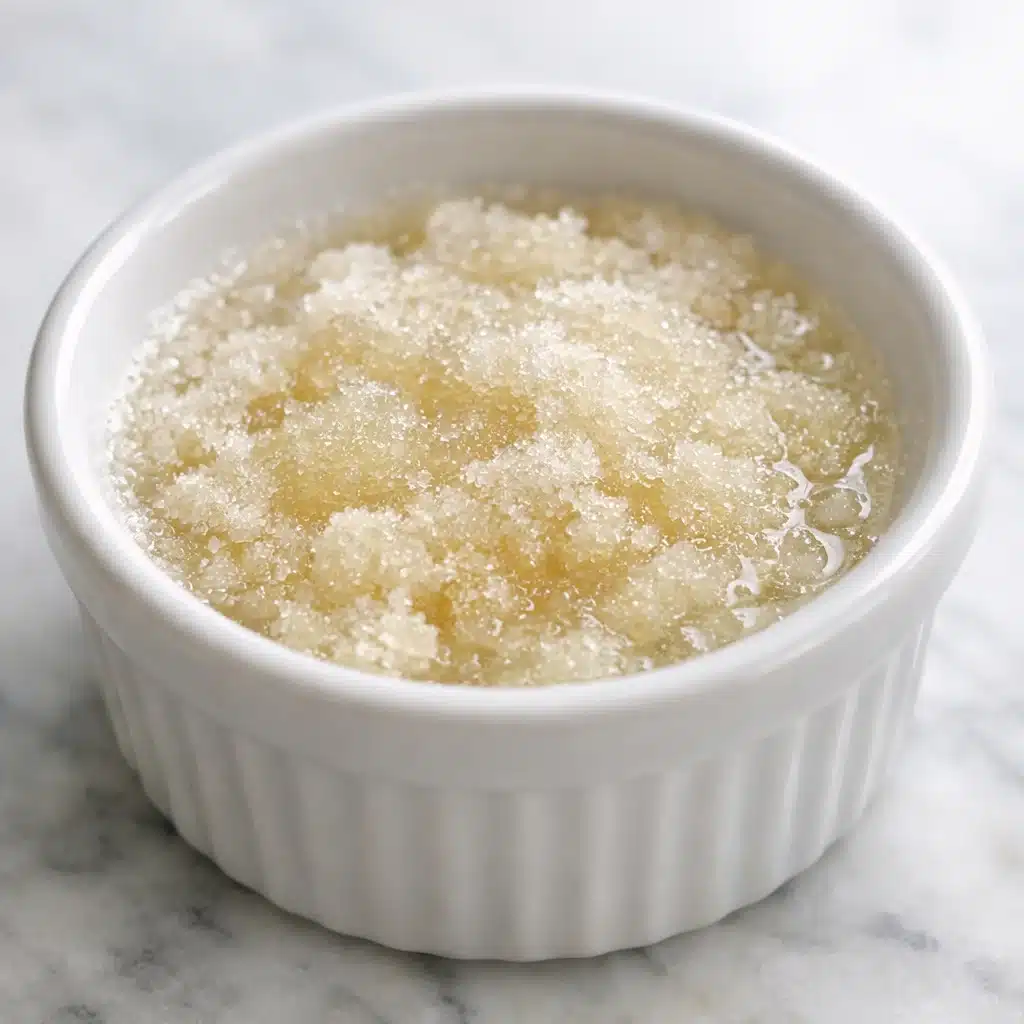
Measure 1 teaspoon of unflavored gelatin into a small bowl. Add 1 tablespoon of cold water. Stir very gently and leave undisturbed for 5 minutes. This is the blooming step — the foundation of the gelatin for gluten free pizza dough technique. The gelatin will absorb all the water and become a firm, spongy mass. Do not rush this step.
Sophia’s tip: I bloom the gelatin before I measure anything else. By the time I have the flour, yeast, and oil ready, the gelatin is perfectly bloomed and ready to melt. This is how the technique becomes effortless.
Step 2: Activate the Yeast
In a medium bowl, combine 3/4 cup of warm water, sugar, and yeast. For this gelatin gluten free pizza dough yeast mixture, water temperature is critical. Too cold and the yeast will not activate. Too hot and you will kill it. Aim for 110–115°F — warm but comfortable to the touch. Let it sit for 5–7 minutes until foamy and fragrant.
While the yeast activates, melt your bloomed gelatin. Microwave for 10 to 15 seconds until fully liquid. It should be warm and slightly steaming. Add the liquid gelatin to the yeast mixture and stir to combine. This is the step that sets this recipe apart from every other gluten free pizza dough you have tried.
Step 3: Mix the Dry Ingredients
In a large mixing bowl, whisk together the gluten free flour blend, tapioca starch, garlic powder, dried oregano, and salt. Make a well in the center. Mixing the dry ingredients thoroughly before adding wet ensures even distribution of the tapioca starch — which is what gives you that chewy texture in the finished crust.
Step 4: Combine and Form the Dough
Pour the yeast and gelatin mixture, olive oil, and apple cider vinegar into the well in your dry ingredients. Mix with a spatula or stand mixer on medium speed for 2 minutes. The gelatin gluten free pizza dough should feel smooth, soft, and slightly tacky — not sticky enough to coat your hands, but definitely wetter than traditional wheat dough. This is normal and correct.
Do not add more flour. The stickiness is what keeps the crust tender and prevents it from baking up dry and cracker-like. Trust the recipe.
Sophia’s tip: If the dough feels too wet to work with, refrigerate it for 15 minutes before shaping. Cold dough is significantly easier to handle and spreads more evenly on the pan.
Step 5: Rest the Dough
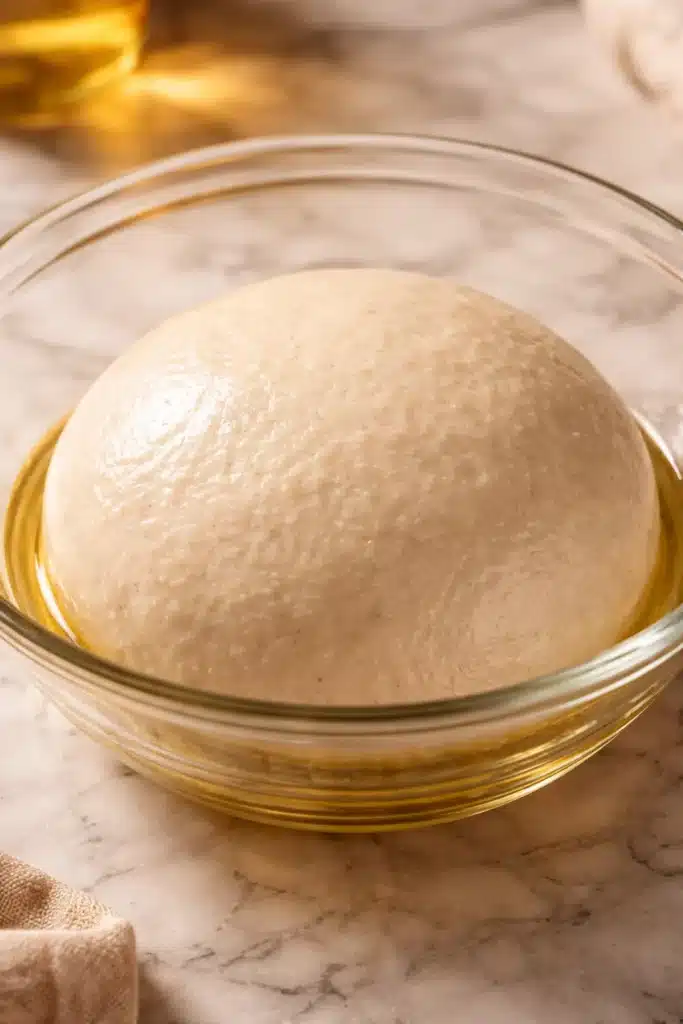
Cover the bowl with a clean towel or plastic wrap and let the dough rest at room temperature for 30 minutes. This rest period allows the yeast to begin working, the tapioca starch to fully hydrate, and the gelatin network to start setting — all of which contribute to a better texture in the finished crust.
Step 6: Shape and Pre-Bake
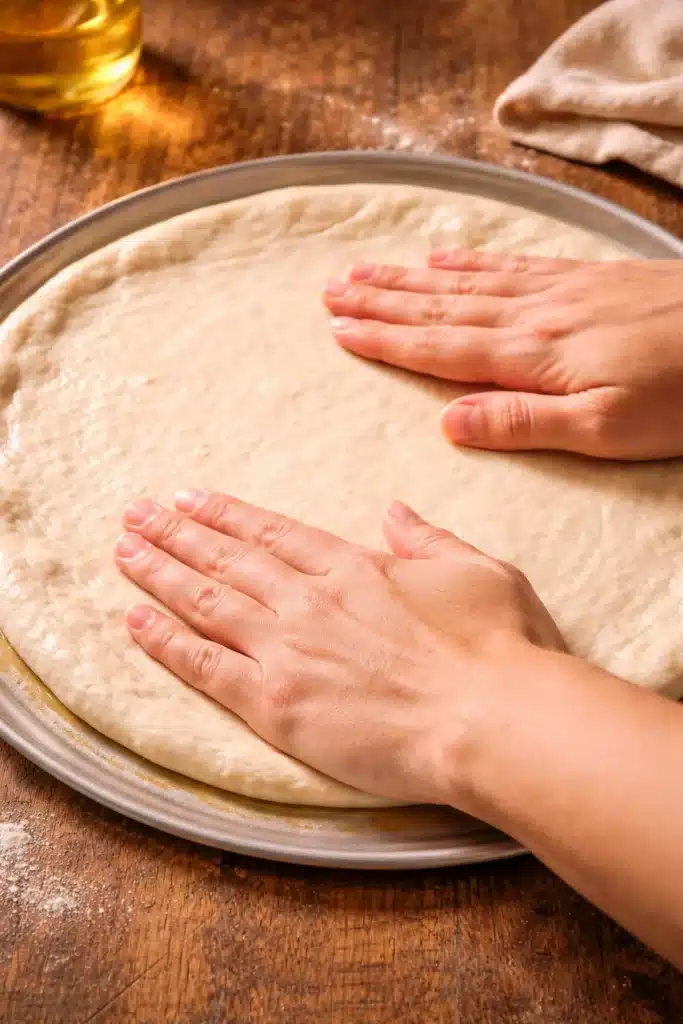
Preheat your oven to 450°F (230°C). Lightly oil a 12-inch round pizza pan or baking sheet. Transfer the dough to the pan and press it outward from the center using oiled fingertips. The gelatin trick pizza dough will spread smoothly without cracking — aim for an even thickness of about 1/4 inch, with slightly thicker edges.
Pre-bake the shaped crust for 8 minutes before adding any toppings. This step is non-negotiable for thin crust pizza. It sets the base so it can support toppings without going soggy and gives the bottom of the crust a head start on crisping up.
Step 7: Add Toppings and Finish Baking
Remove the pre-baked crust from the oven. Add your sauce, cheese, and toppings, keeping them within 1/2 inch of the edge. Return to the oven and bake for a further 10 to 12 minutes until the cheese is bubbling and the crust edges are golden and slightly charred. Let it rest 3 minutes before slicing.
Does Gelatin Really Work in Gluten Free Pizza Dough?
Yes — and the gelatin gluten free pizza dough result is genuinely different from anything else I have made without it. Here is what changes when you add gelatin to the dough:
- The dough presses and shapes without tearing at the edges
- The baked crust has a chewy interior instead of a dry, brittle crumb
- The edges puff and brown the way real pizza crust does
- Leftover slices reheat well without becoming cardboard
- The crust holds up under toppings without going soggy
Without gelatin, gluten free pizza dough tends to produce a crust that is either too crispy all the way through or soft and gummy in the center. The gelatin creates a balanced texture: crispy where you want it, chewy where it matters.
The first time I made this with gelatin, my partner took one bite and said: this actually tastes like pizza. That was three years ago and it is still the best thing anyone has ever said about my gluten free cooking. — Sophia
Pro Tips for Perfect Gelatin Gluten Free Pizza Dough
After making this gelatin gluten free pizza dough dozens of times, here are the things that make the biggest difference:
- Use a pizza stone or preheated baking steel for the crispiest base — place it in the oven while it preheats
- Always pre-bake the crust before adding toppings — this is the most important tip for the gelatin trick pizza dough to work as intended
- Oil your hands and the pan generously — this prevents sticking without adding extra flour
- Do not overload toppings — thin crust pizza works best with a light, even layer of each element
- Let the pizza rest 3 minutes after baking — this gives the gelatin network time to set and makes slicing much cleaner
- Reheat leftovers in a dry skillet over medium heat — this revives the crispy base far better than the microwave
Gelatin Gluten Free Pizza Dough Variations
One of the things I love most about this gelatin gluten free pizza dough is how adaptable it is. Here are the variations I make most often:
Dairy Free Version
This recipe is already dairy free as written. No butter, no milk, no cheese in the dough itself. Use your favorite dairy-free mozzarella for the topping.
Herb Crust
Add 1 teaspoon of dried rosemary and 1/2 teaspoon of dried thyme to the dry ingredients. The herbs bake into the crust and add a fragrant, savory layer that works especially well with simple tomato and basil toppings.
Garlic Butter Crust
After pre-baking, brush the edges of the crust with a mixture of melted butter or olive oil, minced garlic, and flaky sea salt before adding toppings. The garlic caramelizes during the final bake and the edges become irresistible.
No-Yeast Version
Replace the yeast with 1 teaspoon of baking powder and skip the rest period. The crust will be slightly denser and less airy but still holds together beautifully. Great for weeknights when you do not want to wait.
Storing Your Gelatin Gluten Free Pizza Dough
Refrigerator
Wrap the uncooked dough tightly in plastic wrap and refrigerate for up to 2 days. Cold dough is actually easier to shape than room-temperature dough. Remove from the fridge 15 minutes before pressing onto your pan.
Freezer
To freeze gelatin gluten free pizza dough, shape it into a ball, wrap tightly in plastic wrap, then seal in a freezer bag. Freeze for up to 3 months. Thaw overnight in the refrigerator before using. The gelatin network holds up well through freezing and thawing — you will not notice a difference in texture.
Pre-Baked Crusts
Pre-bake the shaped crusts for 8 minutes, let cool completely, then stack with parchment between layers and freeze for up to 2 months. On pizza night, pull them straight from the freezer, add toppings, and bake for 12 to 14 minutes. This is my favorite meal prep move for busy weeknights.
Gelatin Gluten Free Pizza Dough — FAQs
Can I make gelatin gluten free pizza dough ahead of time?
Yes. Make the dough up to 2 days ahead and refrigerate, or up to 3 months ahead and freeze. Pre-baked crusts freeze even better than raw dough and come together faster on pizza night.
Can I make gelatin gluten free pizza dough without yeast?
Yes — replace the yeast with 1 teaspoon of baking powder and skip the 30-minute rest. The crust will be slightly less airy but still holds together and bakes up with good texture. A solid option when you want pizza on the table quickly.
Can I use this dough for thick crust pizza?
Absolutely. Use the same dough but press it to 1/2 inch thickness instead of 1/4 inch. Increase the pre-bake time to 12 minutes and the final bake to 14 to 16 minutes. The gelatin trick works just as well for thicker crusts.
Why does my gluten free pizza dough keep tearing?
Tearing usually means either the dough is too dry or you are not using enough oil when shaping. Make sure your hands and the pan are generously oiled. If the dough keeps cracking, add one tablespoon of warm water at a time and mix again. The gelatin trick specifically addresses tearing — if you are using this recipe and still getting tears, the most common cause is dough that has dried out slightly during the rest period.
Does gelatin change the flavor of the pizza dough?
No. Unflavored gelatin has no detectable taste at the amounts used in this recipe. Your pizza crust will taste like pizza — not like anything else. The gelatin contributes only texture, not flavor.
Final Thoughts from Sophia
Gluten free pizza is one of those recipes where the gap between good and great is enormous. Most gluten free crusts are just okay. This one is genuinely great. The gelatin trick is the reason.
Every gelatin gluten free pizza dough recipe I develop at The Savory Hearth starts with this same foundation — because it works, every single time, without fail. Once you make it, I promise you will not go back to pressing crackers into a pan and calling it pizza night.
Make it this week. Take a photo. And let me know in the comments which toppings you went with — I am always looking for new combinations.
Happy pizza night. — Sophia Bennett, The Savory Hearth