
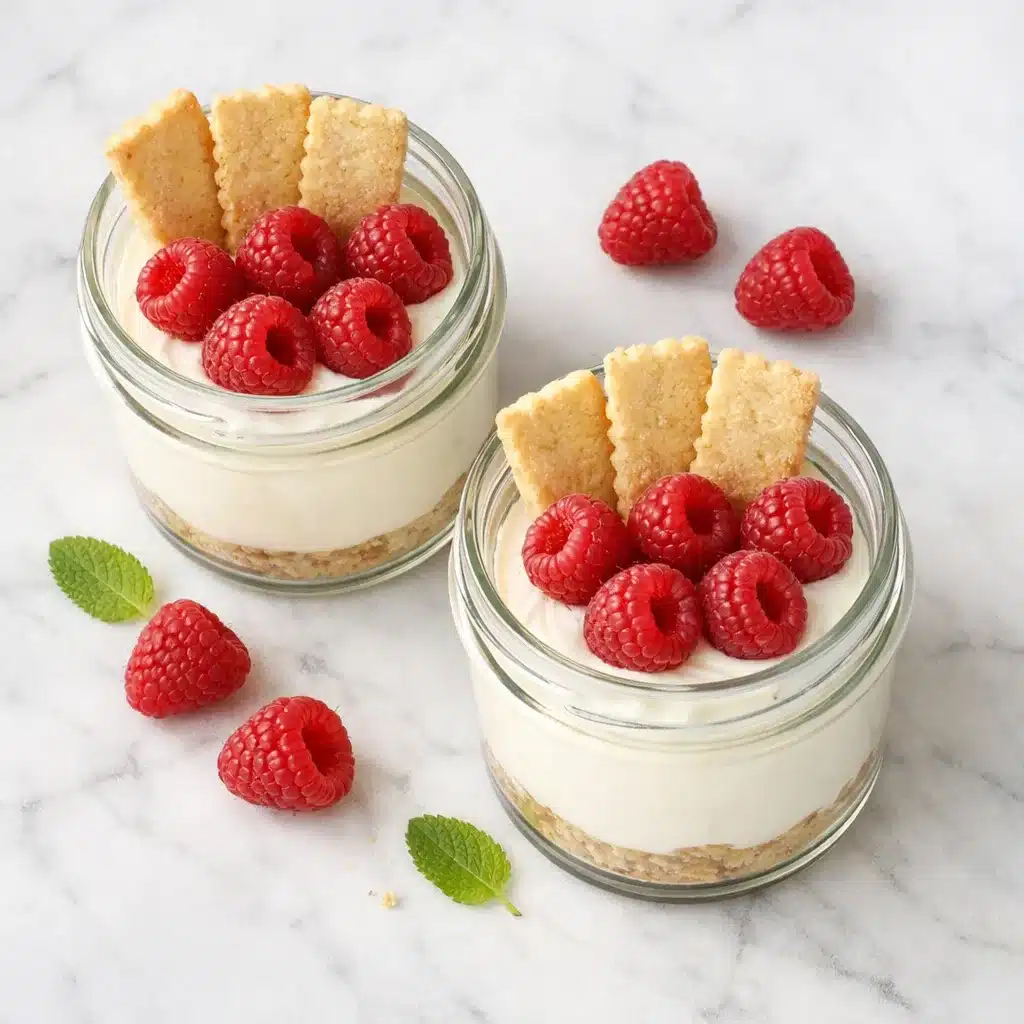
No gluten, no stress… just pure comfort in every spoon
If you’re gluten-free and you’ve been watching everyone make the viral Japanese cheesecake hack on TikTok, this article is for you. The good news: making a gluten-free viral Japanese cheesecake is absolutely possible — and with the right cookie swap and one gelatin trick, your version will taste just as good as the original.
The viral Japanese cheesecake hack is deceptively simple: press thin cookies into thick Greek yogurt, refrigerate for a few hours, and the two ingredients transform into something that tastes and feels shockingly like real cheesecake. No baking. No cream cheese. No water bath. Just two ingredients and a fridge.
The problem for us? The original recipe uses Biscoff cookies — and Biscoff is not gluten-free. Most people who try a straight cookie swap end up with a disappointing result: mushy cookies, liquid yogurt, or a texture that’s nothing like the original. In this guide, I’ll show you exactly why that happens, which GF cookies actually work, and how to nail the gluten-free viral Japanese cheesecake every single time.
- Quick note: This is the viral no-bake hack (yogurt + cookies), NOT the traditional baked Japanese cotton cheesecake. Two completely different recipes — same name. If you want the baked soufflé version, check out our gluten-free Japanese cotton cheesecake guide →
| ⚡ What You Need at a Glance Full-fat Greek yogurt (2 cups per 2 servings) — must be full-fat Certified gluten-free cookies: Simple Mills Sweet Thins or Schar Biscotti ½ tsp unflavored gelatin powder per serving (the GF texture upgrade) 5 minutes to prep, 4–8 hours to chill Result: creamy, tangy, cheesecake-like — completely gluten-free |
Table of Contents
Table of Contents
What Is the Viral Japanese Cheesecake Hack?
The trend started in Japan, where home cooks discovered that pressing thin sablé-style cookies into thick yogurt and refrigerating overnight creates a genuinely cheesecake-like texture. As the cookies absorb moisture from the yogurt, they soften into something almost cake-like. At the same time, the cookie starches slightly thicken the yogurt. The result activates the same sensory experience as cheesecake: creamy, tangy, dense, sweet.
When the trend hit Western TikTok in early 2026, the Biscoff version exploded. The two-ingredient formula was perfect for social media — and the fact that it actually worked made it stick. Videos showing the gluten-free viral Japanese cheesecake version started appearing almost immediately, but most of them used a simple cookie swap that doesn’t perform the same way.
- The key insight: Biscoff cookies work in the original recipe because of their specific starch structure — thin, dense, with wheat starch that absorbs moisture at exactly the right rate. Gluten-free cookies behave differently, and that’s why a direct swap usually fails. Biscoff is not gluten-free — learn more about gluten-free diet guidelines.
Why Most Gluten-Free Cookie Swaps Fail
Before I give you the winning cookies, here’s what happens when people try the wrong ones — because understanding the failure mode helps you make better choices.
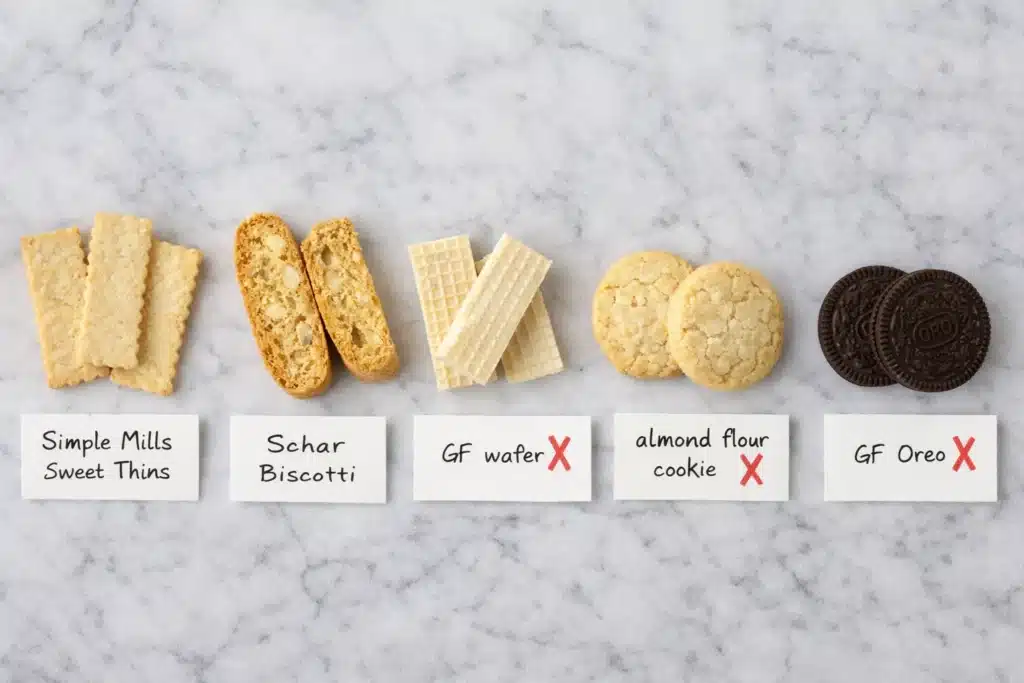
- Rice-based thin cookies (GF wafers): absorb moisture way too fast. Within 2 hours they’re fully soggy and the yogurt stays liquid. Result: yogurt soup.
- Almond flour cookies: barely absorb at all. Still crunchy after 8 hours, yogurt still liquid. The almond flour is mostly fat and protein — no meaningful starch to interact with the yogurt.
- GF Oreos: the filling dissolves into the yogurt and turns everything gray. The fat content is too high and creates a greasy layer instead of a creamy one.
- GF graham crackers: too crumbly. They fall sideways immediately and dissolve into uneven chunks. You lose all the visual appeal and the textural contrast that makes the gluten-free viral Japanese cheesecake work.
What you actually need: a GF cookie with moderate starch content, medium fat, firm structure, and consistent thickness. Two cookies fit that profile perfectly.
The Two GF Cookies That Actually Work
Simple Mills Sweet Thins (Winner #1): Closest GF equivalent to Biscoff. Almond and coconut flour base with tapioca starch — absorbs moisture at exactly the right rate. Stays firm for the first few hours, then softens perfectly by hour 4–6. Subtly sweet, vanilla-forward flavor. Widely available at Whole Foods, Target, and Amazon. Best for the 4–6 hour version of the gluten-free viral Japanese cheesecake.
Schar Biscotti (Winner #2): Denser and harder than Sweet Thins, which means they need more time — this is an overnight cookie. But the payoff is a thick, almost crust-like layer after 10–12 hours that’s indistinguishable from baked cheesecake crust. Less sweet, more sophisticated flavor. Certified GF and produced in a dedicated GF facility. Best for dinner-party presentations.
Both cookies are certified gluten-free, not just ‘gluten-free labeled’ — important for anyone with Celiac disease. Best GF cookies for the hack.
Gluten-Free Viral Japanese Cheesecake (No-Bake)
Ingredients
Method
- Step 1 — Bloom the gelatin
- Sprinkle ½ tsp gelatin evenly over 1 tbsp cold water in a small bowl. Let sit undisturbed for 5 minutes until spongy. Microwave 8–10 seconds until fully liquid and clear. No granules should remain.
- Step 2 — Make the yogurt base
- Mix Greek yogurt with vanilla, honey, salt, and lemon juice until smooth. Pour liquid gelatin in a thin stream while stirring constantly. Work quickly — you have about 5 minutes before the gelatin starts to set.
- Step 3 — Fill the jars
- Divide yogurt evenly between two 8oz glass jars, filling each about ¾ full. Leave room at the top for the cookies.
- Step 4 — Insert the cookies
- Press 6–8 GF cookies vertically into each jar, pushing them halfway into the yogurt. They should stand upright with a small gap between each one.
- Step 5 — Refrigerate
- Cover and refrigerate for a minimum of 4 hours. For best results, chill overnight. Simple Mills Sweet Thins = best at 4–6 hours. Schar Biscotti = best overnight.
- Step 6 — Top and serve
- Add toppings just before serving — never before refrigerating. Spoon jam in the center, add raspberries, drizzle honey. Serve cold.
Notes
The Gelatin Trick That Makes the GF Version Better Than the Original
Here’s the upgrade that makes our gluten-free viral Japanese cheesecake different from every other GF version you’ve seen.
The original viral Japanese cheesecake works partly because wheat-based cookies release a specific type of damaged wheat starch that gels slightly with the yogurt proteins. This natural thickening is part of why the yogurt sets so well in the original recipe. GF cookies — even the best ones — don’t release the same starch. The yogurt layer stays slightly looser, and it can weep liquid after a few hours.
The fix: half a teaspoon of bloomed unflavored gelatin stirred into the yogurt before assembling. You won’t taste it. You won’t get a Jell-O texture. What you get is:
- Yogurt that sets firmly and cleanly within 4 hours
- No liquid pooling at the bottom of the jar
- A texture that holds its shape when you scoop it — even on day 2
- The ability to unmold it onto a plate if you want to be fancy
This is the same gelatin trick we use across all our gluten-free baking on The Savory Hearth. → Read the full guide: The Gelatin Trick for Gluten-Free Recipes
| 🔬 The Science (Plain Version) Gelatin is a protein that forms a soft 3D network in liquid when cooled. At ½ tsp per cup of yogurt, the network is gentle — you’d call the result ‘thick and creamy’, not ‘jiggly’. The gelatin reinforces the yogurt’s own casein protein structure and prevents whey from separating. At ¾ tsp you can unmold it. At ½ tsp it’s the classic creamy-set result we want here. |
Ingredients for Gluten-Free Viral Japanese Cheesecake
For 2 servings:
Required
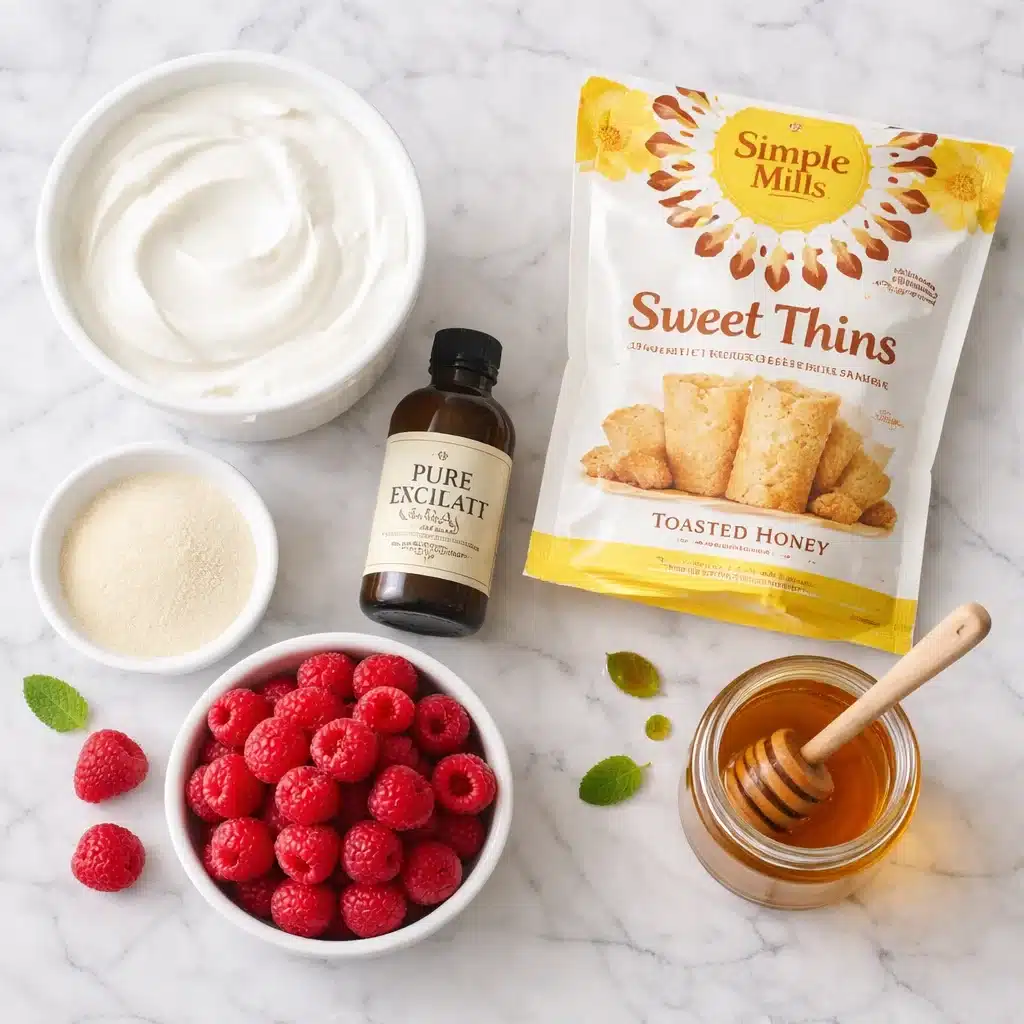
- 2 cups (480g) full-fat plain Greek yogurt — full-fat only. Low-fat has too much water and won’t set even with gelatin.
- 12–16 certified gluten-free cookies — Simple Mills Sweet Thins or Schar Biscotti
- ½ tsp unflavored gelatin powder (Knox or equivalent)
- 1 tbsp cold water — for blooming the gelatin
Optional but recommended
- 1 tsp pure vanilla extract — makes the yogurt taste like cheesecake filling
- 2 tbsp honey or maple syrup — the yogurt needs sweetness to read as dessert
- Pinch of sea salt — sharpens all the flavors
- 1 tsp fresh lemon juice — adds the classic cream cheese tang note
Toppings
- Fresh raspberries or strawberry jam — the tartness contrasts perfectly with the creamy yogurt
- Lemon curd — more elevated, great for dinner parties
- Drizzle of honey + crushed GF cookies — for visual texture
How to Make Gluten-Free Viral Japanese Cheesecake: Step-by-Step
Prep: 5 min Chill: 4–8 hours Servings: 2 Difficulty: Easy
Step 1 — Bloom the gelatin
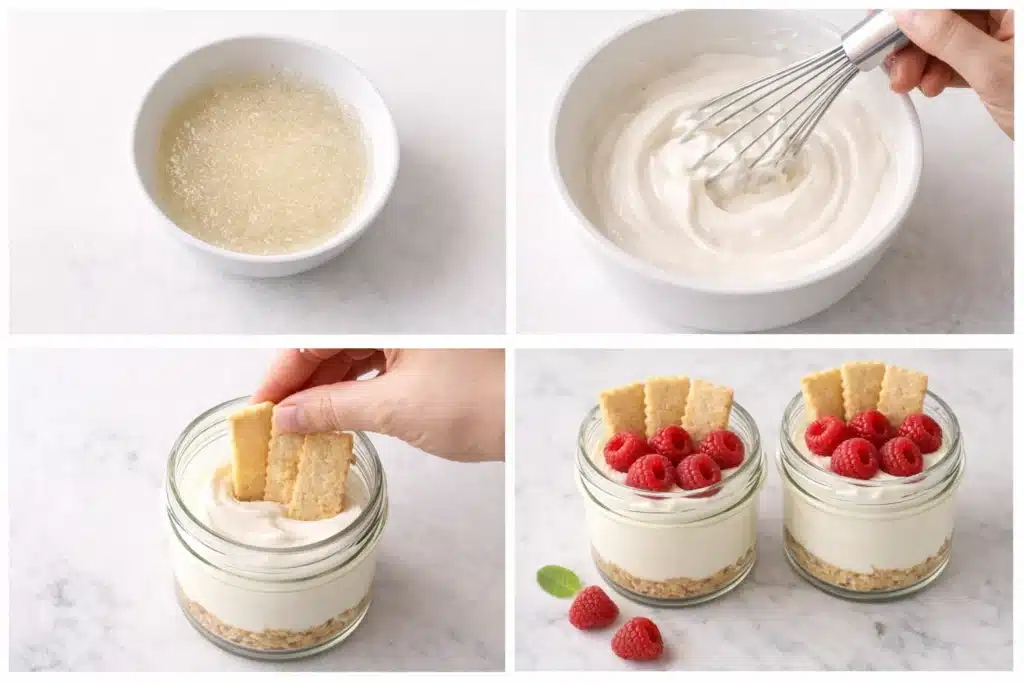
Sprinkle ½ tsp gelatin evenly over 1 tbsp cold water in a small bowl. Let sit undisturbed for 5 minutes — it will turn spongy and rubbery. Don’t rush this step. Microwave for 8–10 seconds until completely liquid and clear. No granules should remain.
Step 2 — Make the yogurt base
Mix Greek yogurt with vanilla, honey, salt, and lemon juice. Taste — it should taste like lightly sweet, tangy cheesecake filling. Pour in the liquid gelatin in a thin stream while stirring constantly. Mix until fully incorporated. Work quickly — you have about 5–8 minutes before the gelatin starts to set at room temperature.
| ⚠️ Timing Tip Have your jars ready BEFORE you add the gelatin to the yogurt. Once mixed, you have ~5 minutes of easy-pouring time. Don’t mix it then go prep containers. |
From liquid… to creamy perfection.
Be honest… would you stop at step 3 or wait until it’s fully chilled?
Step 3 — Fill the jars
Divide the yogurt between two 8oz glass jars, filling each about ¾ full. Wide-mouth mason jars are ideal — straight sides keep cookies upright and the glass lets you see the layers. Leave room at the top for the cookies to sit partially above the surface.
Step 4 — Insert the cookies
Press 6–8 GF cookies vertically into each jar, pushing them halfway into the yogurt. They should stand upright on their own. Leave a small gap between each cookie so the yogurt has full contact with all sides — that contact is what creates the softening effect.
Step 5 — Refrigerate
Cover and refrigerate. Here’s what to expect at each time point:
- 4 hours: yogurt fully set, cookies soft outside / slight bite inside — best for Simple Mills
- 6–8 hours: cookies fully soft, very creamy and integrated
- Overnight: maximum integration, richest result — best for Schar Biscotti
Step 6 — Top and serve
Add toppings just before serving — never before refrigerating. A spoonful of jam in the center, a few raspberries, a drizzle of honey. Serve cold, straight from the fridge.
3 Easy Variations of Gluten-Free Viral Japanese Cheesecake
1. Dairy-Free + Gluten-Free
Swap Greek yogurt for thick coconut yogurt (Cocoyo or Cocojune). Strain through cheesecloth for 30 minutes first to remove excess moisture. Increase gelatin to ¾ tsp — dairy-free yogurts have less natural protein structure and need the extra help to set. Use Enjoy Life Crunchy Cookies for a fully allergen-friendly version.
2. High-Protein Version
Use skyr (Icelandic yogurt) instead of Greek yogurt — it has 17–20g protein per cup vs 15g for Greek. Add one scoop of unflavored collagen peptides to the yogurt before mixing. The amino acids complement the gelatin and enhance the set. Result: the gluten-free viral Japanese cheesecake that doubles as a high-protein breakfast.
3. Tiramisu-Inspired Version
Use vanilla Greek yogurt, mix in 1 tsp instant espresso powder with the gelatin. Use GF ladyfingers (Schar makes them), dipped briefly in cold brew before inserting. Dust with cocoa powder just before serving. Tastes like tiramisu met cheesecake, looks incredibly impressive for 5 minutes of work.
Why Your Gluten-Free Japanese Cheesecake Didn’t Set (3 Common Problems)
Problem 1 — Yogurt still liquid after 4+ hours: Almost always a low-fat yogurt issue. Low-fat yogurt has 70% more water than full-fat. Switch to full-fat Greek yogurt or skyr. If you only have low-fat, increase gelatin to ¾ tsp and extend chill time to overnight.
Problem 2 — Cookies turned to mush: You’re using a rice-based or wafer-style cookie. These absorb moisture too fast. Switch to Simple Mills Sweet Thins or Schar Biscotti. Also make sure the yogurt is cold when you insert the cookies — warmer yogurt accelerates absorption.
Problem 3 — Liquid pooling at the bottom: Whey separation. Happens when gelatin wasn’t mixed in thoroughly enough before it started to set, or when using a lower-quality yogurt brand prone to weeping. Mix the gelatin more vigorously and work faster. Fage, Chobani, and Siggi’s are reliable brands with minimal weeping.
Frequently Asked Questions
Is the viral Japanese cheesecake actually from Japan?
Yes — the trend originated on Japanese social media where home cooks layered yogurt and sablé cookies and discovered the cheesecake-like transformation. The Western TikTok version popularized Biscoff cookies and the ‘viral Japanese cheesecake’ name, even though it bears no resemblance to the traditional baked Japanese cotton cheesecake.
Is this recipe safe for people with Celiac disease?
This recipe uses certified GF ingredients — Simple Mills and Schar are both produced in certified GF facilities, not just labeled gluten-free. If you’re cooking for someone with Celiac, verify every ingredient carries a certified GF label and prepare in a thoroughly cleaned kitchen. Greek yogurt and gelatin are naturally gluten-free with no cross-contamination risk.
How long does gluten-free viral Japanese cheesecake last?
Up to 3 days refrigerated and covered. Day 1 has the best textural contrast. Day 2 is more integrated and equally delicious. By day 3 the cookies are fully soft and the texture is more mousse-like — still good, just different. The gelatin keeps the yogurt from weeping through the full 3 days.
Can I make this without gelatin?
Yes, but results will be less consistent. Use the thickest yogurt you can find (skyr is ideal), stick to full-fat only, and extend chill time to overnight minimum. For a vegan version, substitute agar agar at the same quantity — it sets slightly firmer than gelatin and creates a different but acceptable texture.
What’s the best jar size?
8oz wide-mouth mason jars are ideal. The straight sides keep cookies upright, the wide mouth makes assembly easy, and the glass lets you show off the layers. Ball and Kerr both make them and they’re available at most grocery stores.
Can I use flavored yogurt?
Yes — vanilla, strawberry, or lemon yogurt all work well. Just make sure it’s still full-fat and thick. Flavored yogurts are often lower fat and thinner, so check the label. If the yogurt seems thin, increase gelatin to ¾ tsp.
Final Thoughts: The Gluten-Free Viral Japanese Cheesecake Is Worth the Hype
The gluten-free viral Japanese cheesecake isn’t a compromise version of the original — it’s a genuinely great no-bake dessert that happens to be completely gluten-free. With the right cookies (Simple Mills or Schar), full-fat Greek yogurt, and that small but important gelatin upgrade, you get a creamy, tangy, cheesecake-like result that holds up perfectly through the chill time and beyond.
The fact that it’s also naturally egg-free, takes 5 minutes to assemble, and requires zero baking makes it one of the most accessible gluten-free desserts I’ve made. Whether you’re making it for yourself on a weeknight or dressing it up with jam and fresh berries for a dinner party, the gluten-free viral Japanese cheesecake delivers every time.
Try it overnight with Schar Biscotti for the most cheesecake-like result — and let me know in the comments which topping you went with.
| 📌 Save This Recipe Pin this gluten-free viral Japanese cheesecake recipe for later — and tag @TheSavoryHearth on Instagram when you make it. → Try next: Best GF Cookies for Japanese Cheesecake Hack (12 brands tested and ranked) → Or: The Complete Gelatin Trick Guide for Gluten-Free Baking |