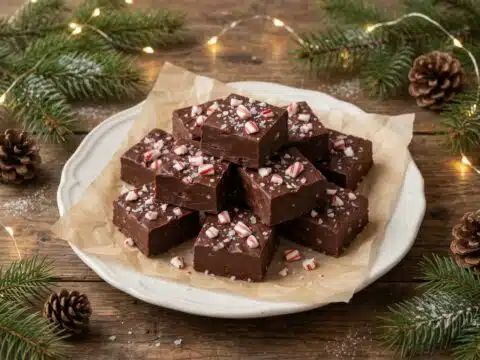
These gingerbread cookies are everything a Christmas cookie should be: deeply spiced, rich with molasses, soft in the middle and just crisp at the edges. They also hold their shape in the oven, so your gingerbread men keep their arms and your trees keep their points.
The dough is easy to mix and can be made days ahead, which makes it ideal for a busy December. Below you will find the step-by-step method with photos, tips for rolling and cutting, how to choose between soft and crisp, decorating ideas, storage advice and a FAQ.

Table of Contents
Table of Contents
Why These Gingerbread Cookies Work
- Balanced spice. Ginger leads, with cinnamon, cloves and nutmeg behind it.
- Sharp shapes. Chilling the dough keeps the edges clean.
- Soft or crisp. A minute or two in the oven changes the texture.
- Make-ahead dough. Prepare it early and bake when you like.
- Great for decorating. The dark cookie makes white icing stand out.
They look wonderful on a holiday tray next to my Christmas sugar cookies, and they can be decorated with the same icing for Christmas cookies.
Ingredients You Need
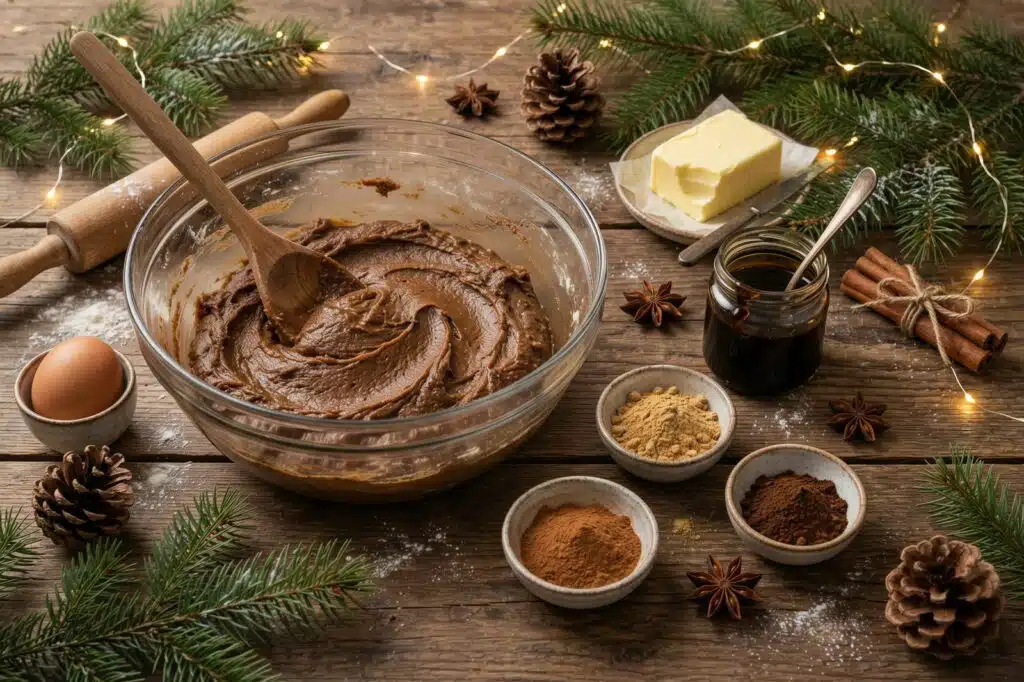
- All-purpose flour: spoon it into the cup and level it, or weigh it.
- Spices: ground ginger, cinnamon, cloves and nutmeg. Fresh jars give the brightest flavor.
- Baking soda and salt: a gentle lift and balance.
- Unsalted butter: softened but still cool.
- Brown sugar: adds moisture and a caramel note.
- Egg: binds the dough.
- Unsulphured molasses: gives color and the classic taste. Blackstrap is much more bitter, so avoid it here.
- Alcohol-free vanilla flavor: rounds out the spices.
How to Make Gingerbread Cookies
1. Mix the dough
Whisk the dry ingredients first so the spices spread evenly. In a separate bowl, beat the butter and brown sugar until fluffy, then add the egg, molasses and vanilla. The mixture may look slightly curdled for a moment, which usually sorts itself out once the flour goes in. Add the flour mixture on low speed and stop as soon as no dry patches remain.
2. Chill
Divide the dough in two, press each piece into a flat disc and wrap well. Chill for at least two hours. The dough is soft and sticky when freshly mixed, and the rest firms it up so it rolls cleanly. It also gives the spices time to settle into the dough.
3. Roll and cut
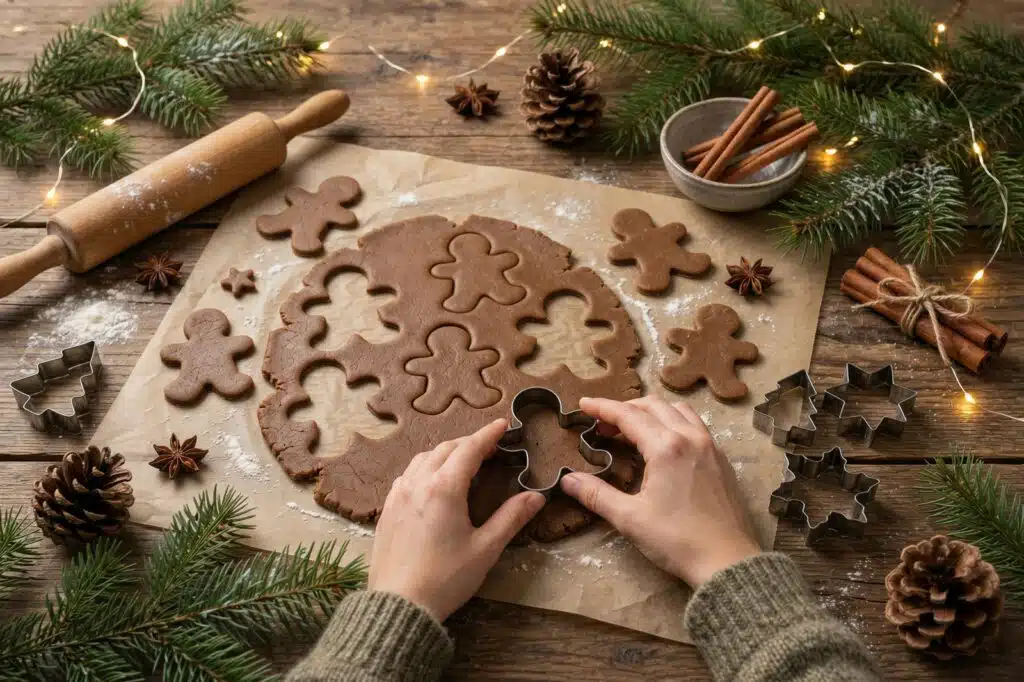
Take out one disc and let it sit for a few minutes if it is too hard to roll. Roll it between two sheets of parchment to about a quarter of an inch. Dip cutters in flour, press straight down and lift the scraps away from the shapes. Slide the parchment onto the pan, which avoids stretching your figures. Gather the scraps, chill them briefly and roll again.
4. Bake and cool
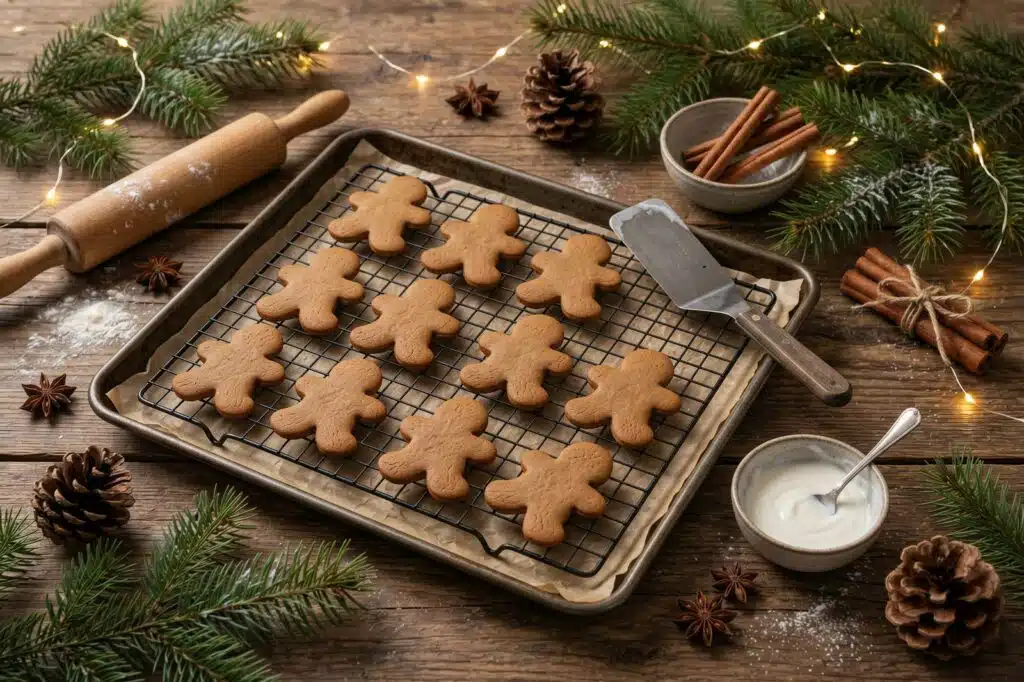
Bake one tray at a time for the most even results. The gingerbread cookies are done when the edges are set and the tops no longer look wet. Because the dough is dark, color is hard to judge, so rely on the timer and a gentle touch. Leave them on the pan for five minutes before moving them to a rack, since they are fragile while hot.
Soft or Crisp: Your Choice
For soft gingerbread cookies, roll the dough a full quarter inch or slightly thicker and bake about eight minutes. They will look a little underdone and then finish setting as they cool. For crisp cookies, roll closer to an eighth of an inch and watch closely, since thin shapes bake faster. Crisper ones are better for hanging or for standing up in displays. Keep cutters of a similar size on the same tray so every piece is ready at once.
Tips for Success
- Do not skip chilling. Warm dough sticks and spreads.
- Use little extra flour. Too much makes the cookies dry.
- Work with half the dough and keep the rest cold.
- Use cool baking sheets between batches.
- Check early. Ovens vary, and a minute matters.
- Cool fully before icing, or the icing will melt.
- Make a hole before baking with a straw if you plan to hang them.
How to Decorate Them
A thin white outline is the classic look. Add buttons, smiles and scarves with a small round piping tip, or flood part of a shape and add sprinkles while wet. Royal icing dries firm, so decorated cookies can be stacked and gifted. My guide to royal icing for decorating explains outline and flood consistency. Check sprinkles and candies for gelatin if you avoid animal products or keep halal. For a quick finish, dust plain cookies with powdered sugar.
Understanding the spices. The flavor of gingerbread cookies comes mostly from ground ginger, which gives warmth with a gentle bite. Cinnamon adds sweetness, cloves add depth and nutmeg rounds everything out. Cloves are strong, so measure them carefully. If your spices have been open for a long time, smell them first. A weak aroma means weak flavor, and replacing the jar makes a real difference. For a milder batch for young children, reduce the ginger and cloves a little and keep the cinnamon as written.
Working with molasses. Molasses is thick and sticky, so lightly grease your measuring cup before you pour it in and it will slide out cleanly. Use unsulphured molasses, often labeled mild or original. It gives gingerbread cookies their warm brown color and chewy center. Golden syrup or honey will make a lighter, sweeter cookie with a different taste, so they are not a perfect swap in this recipe.
Making gingerbread houses or ornaments. If you want pieces that stand up, roll the dough evenly and bake a little longer until the cookies feel firm. Trim the edges with a sharp knife while they are still warm, so the walls fit together neatly. Let them dry on a rack before assembling, and use stiff royal icing as the glue. For ornaments, make the hole for the ribbon before baking and check it again as soon as the tray leaves the oven.
Common mistakes to avoid. The biggest problems with gingerbread cookies are skipping the chill, adding too much flour while rolling and baking too long. Another is icing them while they are still warm. Give the cookies time at each stage and they will keep their shape, stay tender and look neat when decorated.
Storing and Freezing Gingerbread Cookies
Keep the cookies in an airtight container at room temperature for about a week. Iced ones should be completely dry and layered with parchment. If crisp cookies share a tin with soft ones, they will soften, so store them apart. The raw dough keeps in the fridge for up to three days or in the freezer for up to three months; thaw it overnight in the fridge. Baked, undecorated gingerbread cookies also freeze well in a sealed container. Because the dough contains raw egg and flour, do not eat it unbaked; the FDA safe food handling guidance covers safe kitchen habits. The USDA safe temperature chart is useful for the rest of your holiday cooking.
Variations
- Extra ginger: add a little more ground ginger or a spoonful of finely chopped crystallized ginger.
- Orange: add the zest of one orange to the butter and sugar.
- Chocolate dipped: dip half of each cooled cookie in melted chocolate.
- Sugar crusted: sprinkle coarse sugar on top before baking.
- Cookie sandwiches: join two small rounds with vanilla frosting.
Gifting and Cookie Boxes
These make a lovely homemade gift. Let the icing dry overnight, then layer the cookies with parchment in a tin or box and fill any gaps so they do not slide around. For single gifts, slip one or two into a clear bag and tie it with ribbon. Add a small label listing the main allergens, including wheat, egg and milk, so the person receiving them knows what is inside.
More Christmas Baking
Build a cookie box with these gingerbread cookies, cut-out sugar cookies and a batch of gluten free sugar cookies for guests who need them. For dessert, serve pumpkin pie or cheesecake, and explore more ideas in our homemade recipes.

Gingerbread Cookies
Ingredients
Method
- Whisk the flour, ginger, cinnamon, cloves, nutmeg, baking soda and salt in a bowl.
- Beat the softened butter and brown sugar for 2 minutes until light and fluffy.
- Beat in the egg, molasses and vanilla until smooth.
- Add the dry ingredients on low speed just until a soft dough forms.
- Divide the dough in two, flatten into discs, wrap and chill for at least 2 hours.
- Heat the oven to 350°F (175°C) and line two baking sheets with parchment.
- Roll one disc between parchment sheets to 1/4 inch thick. Cut shapes, place them 1 inch apart on the pans and chill for 10 minutes.
- Bake for 8 to 10 minutes, until the edges are just set. Cool 5 minutes on the pan, then move to a wire rack.
- Decorate with icing once completely cool and let it dry before stacking.
Notes
Gingerbread Cookies FAQ
How long should the dough chill?
At least two hours. Overnight also works well; let it soften a few minutes before rolling.
Why did my cookies spread?
The dough was probably too warm or the butter too soft. Chill the cut shapes before baking.
Why are my cookies hard?
They may have baked too long or picked up too much flour while rolling.
Can I make the dough ahead?
Yes. Refrigerate it for up to three days or freeze it for up to three months.
Can I use blackstrap molasses?
It is not recommended here because it is much more bitter.
What icing works best?
Royal icing is best for detail and stacking because it dries firm.
If you bake these gingerbread cookies, leave a rating and a comment to tell me which shapes you made. Merry Christmas and happy baking!