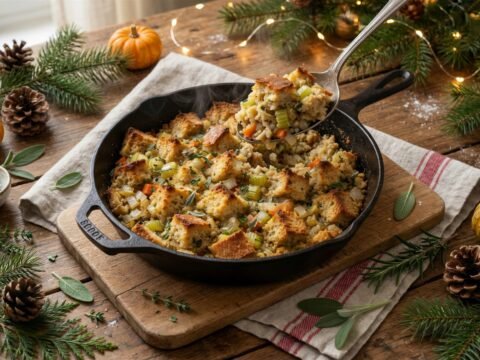
This gluten free stuffing has everything you want on a holiday table: crisp, buttery edges, a soft and savory center, and plenty of fresh sage and thyme. It is made with toasted gluten-free bread cubes, sauteed celery and onion, and a simple egg and broth mixture that holds it all together without turning mushy. One bite and nobody will guess it is gluten free.
Stuffing is often the dish gluten-free guests have to skip, which is a shame because it is the one many people look forward to most. This gluten free stuffing recipe fixes that. It uses a regular loaf of gluten-free sandwich bread, one skillet and one baking dish, and it can be assembled a day ahead. Below you will find the full method, the bread tips that make or break the texture, variations, make-ahead steps and answers to common questions.
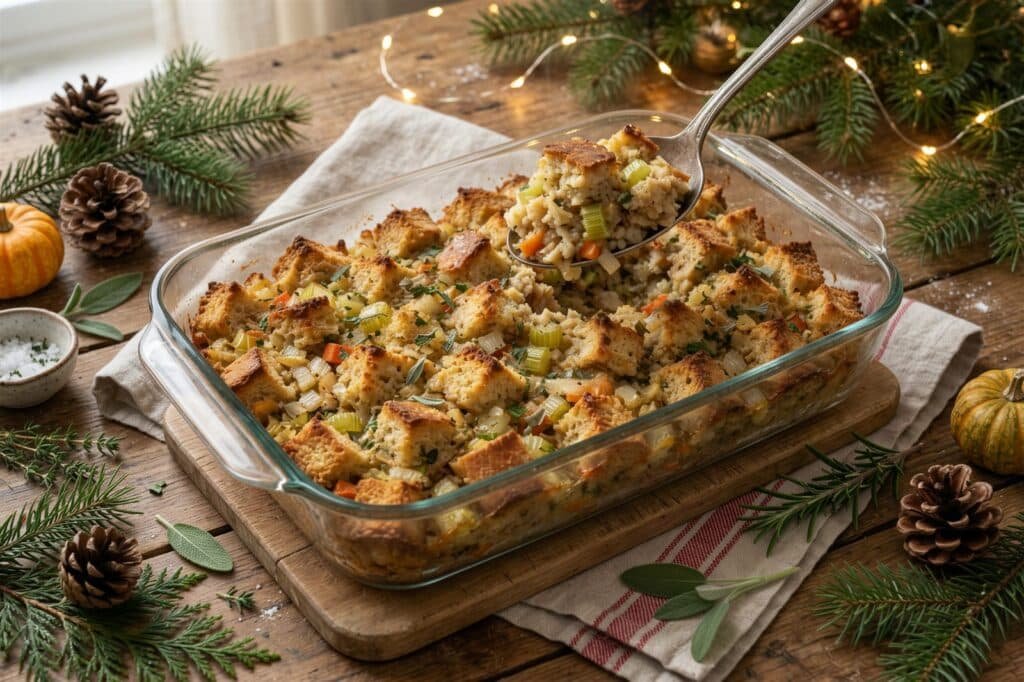
Table of Contents
Table of Contents
Why You Will Love This Gluten Free Stuffing
- Crisp on top, soft inside. Toasting the bread first gives it structure, so every bite has contrast.
- Full of herb flavor. Fresh sage, thyme and parsley give it that classic holiday aroma.
- Uses everyday ingredients. A loaf of gluten-free sandwich bread, butter, vegetables, eggs and broth.
- Make-ahead friendly. Assemble it the day before and bake when the turkey comes out of the oven.
- No pork needed. The flavor comes from butter, herbs and a good broth, so it suits more tables.
Serve it next to homemade turkey gravy and the rest of your holiday spread, and use any extras in these leftover turkey recipes.
Gluten Free Stuffing Ingredients
The ingredient list is short, but a few choices matter a lot for a great gluten free stuffing.
- Gluten-free sandwich bread: choose a sturdy loaf rather than a very soft one. Sourdough-style loaves such as my gluten free sourdough bread work beautifully, and so do firm store-bought sandwich loaves.
- Butter: unsalted butter for sauteing the vegetables and buttering the dish.
- Onion, celery and carrot: the classic aromatic base. Dice them evenly so they cook at the same pace.
- Fresh herbs: sage, thyme and parsley. Dried herbs work if needed, using about one-third the amount.
- Eggs: two eggs give the stuffing structure and a custardy richness.
- Gluten-free chicken broth: check the label, since some broths contain wheat. Vegetable broth also works.
Always read labels on broth, seasonings and bread. The Celiac Disease Foundation gluten-free foods guide is a handy reference for checking ingredients and avoiding cross-contact in your kitchen.
How to Make Gluten Free Stuffing
1. Dry out the bread
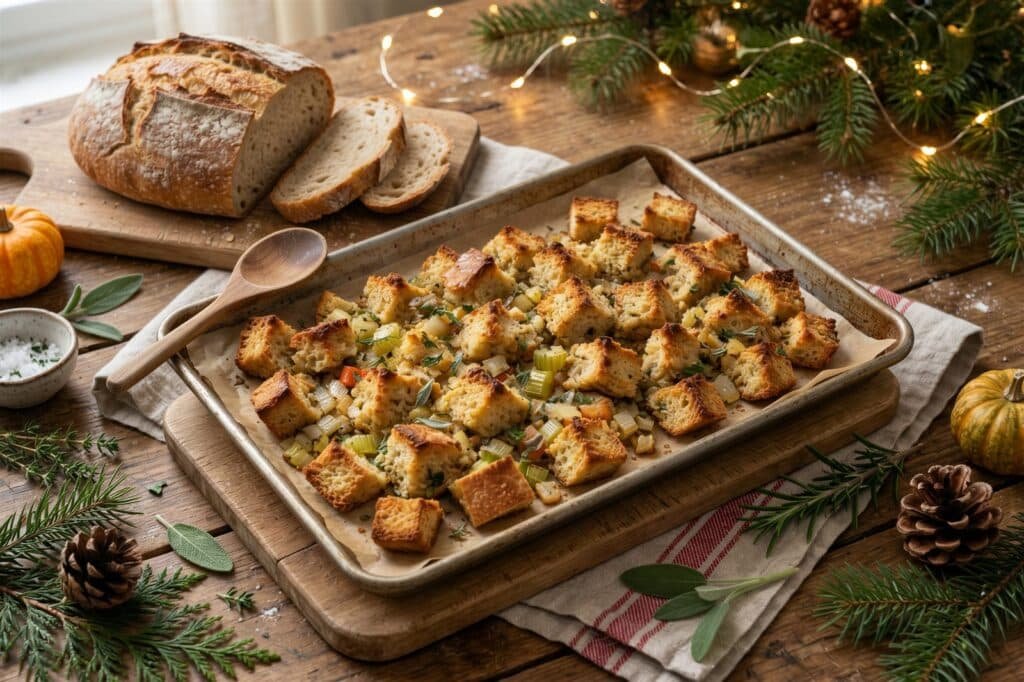
Cut the loaf into 3/4-inch cubes and spread them on two baking sheets. Bake at 275°F for 30 to 40 minutes, stirring once, until the cubes are dry and lightly toasted. This step is the secret to a good gluten free stuffing. Gluten-free bread is softer and absorbs liquid faster than regular bread, so cubes that are dried out properly soak up the broth without collapsing.
If you are short on time, bake the cubes at 350°F for 15 minutes, turning them halfway. You can also dry the bread a day or two ahead and store it in a bag at room temperature.
2. Saute the vegetables

Melt the butter in a large skillet over medium heat. Add the onion, celery and carrot and cook for 8 to 10 minutes, stirring often, until soft but not browned. Stir in the garlic, sage, thyme, parsley, salt and pepper and cook for one more minute until fragrant. This base is where most of the flavor of the finished gluten free stuffing comes from, so do not rush it.
3. Mix with the broth and eggs

Add the toasted bread cubes and vegetables to a large bowl and toss gently. Whisk the eggs into 1 3/4 cups of broth and pour it over the bread, folding gently until every cube is moistened. The mixture should be damp but not swimming in liquid. If you see dry pockets, add a splash more broth, a few tablespoons at a time.
4. Bake until golden
Spoon the mixture into a buttered 9×13-inch baking dish. Cover with foil and bake at 350°F for 25 minutes so the center cooks through and stays moist, then uncover and bake 20 to 25 minutes more until the top is golden and crisp. Because the stuffing contains eggs, check that the center reaches 165°F (74°C) using the USDA safe temperature chart as a reference. Let it rest for ten minutes before serving.
Tips for the Best Gluten Free Stuffing
- Do not skip the toasting. Untoasted bread turns pasty, and toasted cubes stay distinct.
- Start with less broth. You can always add more, but you cannot take it away.
- Fold gently. Stirring too hard breaks the cubes into crumbs.
- Use the foil. Covering for the first half of the bake keeps the inside tender, then uncovering crisps the top.
- Taste the base. Season the sauteed vegetables well, because the bread will mute the flavor.
- Press the top lightly with a spatula before baking for more even browning.
Gluten Free Stuffing Variations
- Mushroom stuffing: saute 8 ounces of sliced mushrooms with the vegetables for an earthy, savory flavor.
- Apple and cranberry: add 1 diced apple and 1/2 cup dried cranberries for a sweet-tart note.
- Chestnut stuffing: fold in 1 cup of chopped roasted chestnuts.
- Vegetarian: use vegetable broth. The recipe already contains no meat.
- Extra crispy: bake the final 10 minutes at 400°F, watching closely.
- Dairy-free: use olive oil or a dairy-free butter in place of the butter.
How to choose the right bread. The bread you pick has more impact on gluten free stuffing than any other ingredient. Look for a loaf with a firm crumb and a decent crust, since these hold their shape when they meet the broth. Very soft sandwich bread works too, but it needs a longer, slower toasting time so it dries all the way through. If you bake your own, a day-old loaf is ideal, and heels and crusts are welcome in the mix. Avoid breads that are sweet or heavily flavored with seeds, which compete with the herbs.
Getting the texture just right. Great gluten free stuffing has three layers of texture: crisp tops, tender middles and edges that caramelize against the dish. To get there, use a wide, shallow baking dish rather than a deep one, so more of the surface browns. Scatter a few small dots of butter over the top before the final uncovered bake for extra crunch. If you like a softer, more custardy stuffing, add an extra splash of broth and keep the foil on five minutes longer.
Holiday timeline. On a busy holiday, plan ahead. Dry the bread two days before, saute the vegetables the day before, and combine everything with the broth and eggs on the morning you plan to serve it. The stuffing can bake while the turkey rests, since the turkey needs about 30 minutes out of the oven before carving. That frees up the oven and gives you perfectly timed gluten free stuffing without any last-minute stress.
Make-Ahead, Storage and Reheating
You can assemble the stuffing up to one day ahead. Prepare it through the mixing step, spread it in the baking dish, cover and refrigerate. Bake it straight from the fridge, adding about 10 minutes to the covered baking time. Leftover gluten free stuffing keeps for up to four days in an airtight container in the fridge. Reheat covered at 350°F for 15 to 20 minutes, adding a splash of broth if it looks dry. You can also freeze baked stuffing for up to two months and thaw it overnight.
What to Serve with Gluten Free Stuffing
This stuffing is made for a holiday plate. Serve it with roast turkey and perfect homemade gravy or, for a fully gluten-free table, thicken your gravy with a gluten free roux. Add gluten free dinner rolls, finish with gluten free pumpkin pie, and keep the cookie tin filled with gluten free Christmas sugar cookies. If you prefer a crock pot dinner, try slow cooker chicken and stuffing, and if you also want a classic Southern version, see my cornbread dressing. Browse more ideas in the gluten-free recipes collection.
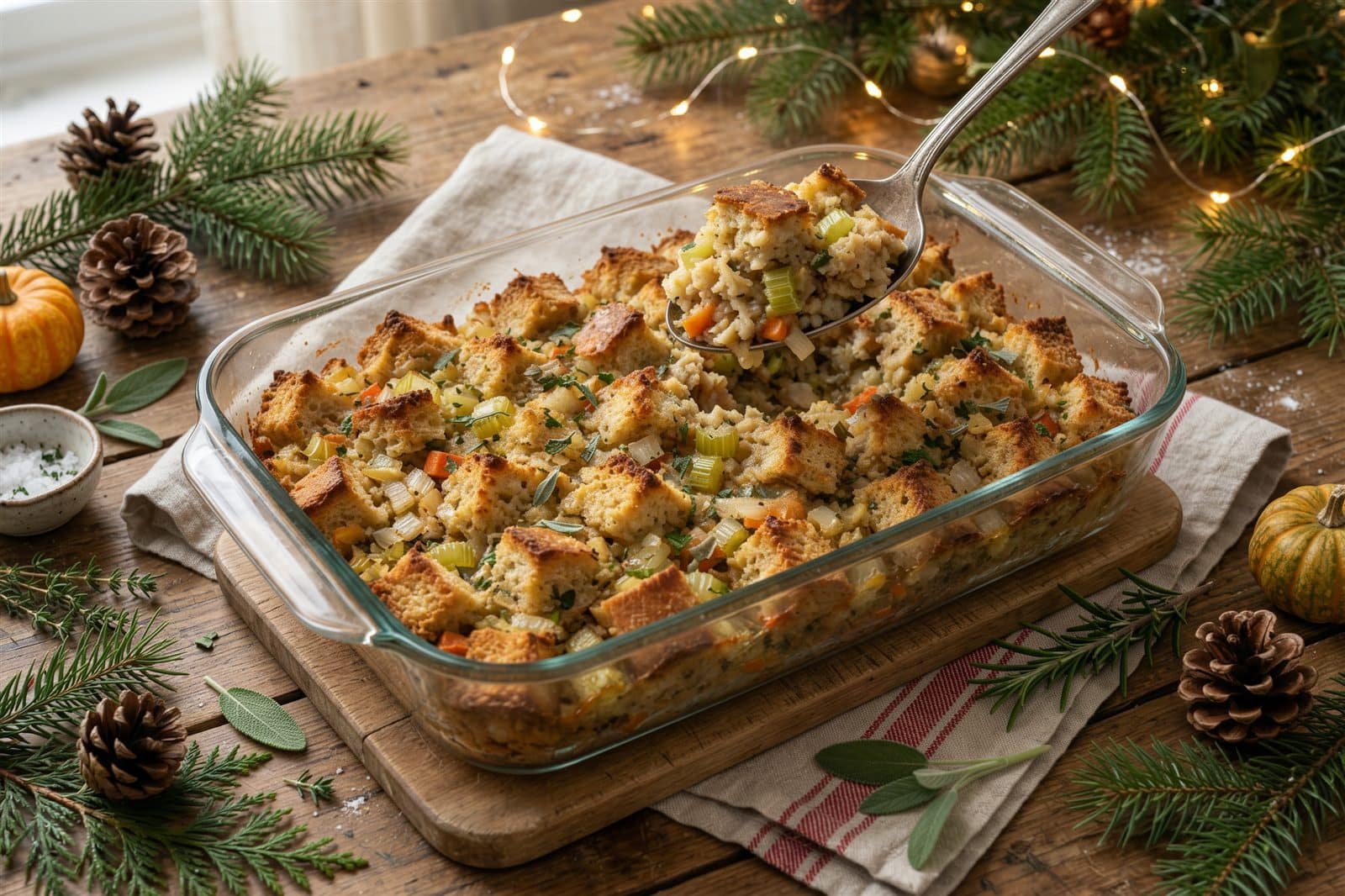
Gluten Free Stuffing
Ingredients
Method
- Dry the bread. Spread the bread cubes on two baking sheets and bake at 275°F (135°C) for 30 to 40 minutes, stirring once, until dry and lightly toasted. Let them cool.
- Heat the oven to 350°F (175°C) and butter a 9×13-inch baking dish.
- Saute the vegetables. Melt the butter in a large skillet over medium heat. Add the onion, celery and carrot and cook for 8 to 10 minutes until soft.
- Add the garlic, sage, thyme, parsley, salt and pepper and cook for 1 minute until fragrant.
- Combine. Put the toasted bread cubes in a large bowl and add the vegetable mixture. Toss gently.
- Whisk the eggs with 1 3/4 cups of the broth and pour over the bread. Fold gently until evenly moistened, adding more broth if any pockets are dry.
- Bake. Spoon into the prepared dish, cover with foil and bake for 25 minutes.
- Remove the foil and bake 20 to 25 minutes more until the top is golden and crisp and the center reaches 165°F (74°C).
- Rest for 10 minutes before serving.
Notes
Gluten Free Stuffing FAQ
What is the best bread for gluten free stuffing?
A sturdy gluten-free sandwich loaf or a sourdough-style loaf holds its shape best. Avoid very soft, airy breads, which turn mushy.
Why is my gluten free stuffing soggy?
Usually the bread was not dried enough or too much broth was added. Toast the cubes until dry and start with 1 3/4 cups of broth.
Why is my gluten free stuffing dry?
Gluten-free bread can absorb liquid quickly. Add broth a few tablespoons at a time until the mixture is evenly damp, and keep the dish covered for the first half of baking.
Can I make gluten free stuffing ahead of time?
Yes. Assemble it up to one day ahead, cover and refrigerate, then bake as directed, adding about 10 minutes.
Can I cook it inside the turkey?
For food safety and the best texture, bake it in a dish. If you cook stuffing in a bird, it must reach 165°F in the center.
Is stuffing the same as dressing?
They are the same idea. Stuffing traditionally cooks inside the bird and dressing is baked in a dish, though many people use the names interchangeably.
If you make this gluten free stuffing, leave a rating and comment below. I would love to hear how it turned out and what you served it with. Happy holidays!