
Homemade turkey gravy is the finishing touch that turns a good holiday dinner into a great one. This old-fashioned version starts with the browned pan drippings from your roast turkey, a simple butter and flour roux, and warm stock. It simmers into a rich, smooth, deeply savory gravy in about 25 minutes, with no lumps and no packets.
If you have ever wondered how to make homemade turkey gravy that tastes like it came from a grandmother’s kitchen, this is the method. It works for Thanksgiving, Christmas, Sunday roast or any day you cook a turkey, and it comes with easy fixes for the problems that trip most cooks up.

Table of Contents
Table of Contents
Why You Will Love This Homemade Turkey Gravy
- Big flavor from simple ingredients. Real turkey drippings, butter, flour and stock are all you need to make homemade turkey gravy that tastes slow-cooked.
- Silky and lump-free. Warm stock and a patient whisk give you a smooth gravy every time.
- Ready in 25 minutes. You can make it while the turkey rests.
- Easy to adapt. No drippings, gluten-free and make-ahead options are all covered below.
- Perfect for the whole plate. It is just as good on turkey as it is on mashed potatoes, stuffing and biscuits.
What Is Old-Fashioned Homemade Turkey Gravy?
Old-fashioned gravy is built in the pan, not from a packet. You separate the fat from the roasting juices, cook that fat with flour to make a roux, and whisk in stock until it thickens. The roux gives the sauce body and a toasty, nutty depth, and the drippings supply the roasted turkey flavor that no store-bought mix can copy.
The method is the same one used for generations of holiday tables. What changes is the care you take: toasting the flour, adding the stock slowly and seasoning at the very end. Those small habits are what make homemade turkey gravy taste rich instead of floury.
Ingredients for Homemade Turkey Gravy
You only need a handful of ingredients. The exact amounts are in the recipe card below.
- Turkey pan drippings. The browned fat and juices from the roasting pan are the heart of the flavor. You need about 1/4 cup of fat for the roux.
- Butter. Use a couple of tablespoons if your turkey gave less fat than you need.
- All-purpose flour. It thickens the gravy and gives it body.
- Turkey stock or low-sodium chicken broth. Warm it first. Low-sodium lets you control the salt.
- Herbs and seasoning. Thyme, sage and a little onion powder echo the flavors of the turkey and stuffing.
- Worcestershire sauce and cream (optional). A splash of Worcestershire adds depth, and a little cream makes the gravy silkier.
Equipment You Will Need
- A fat separator or a glass measuring cup
- A medium saucepan
- A whisk (a flat or balloon whisk both work)
- A fine-mesh strainer for an extra-smooth finish
How to Make Homemade Turkey Gravy Step by Step
Read through the steps once before you start. Making homemade turkey gravy goes quickly, and everything is easier when your stock is warm and your whisk is close.
- Separate the drippings. Pour the roasting pan juices into a fat separator or a glass measuring cup. Let them settle for 5 minutes, then spoon off 1/4 cup of the fat. Keep the dark juices underneath for the stock.
- Warm the stock. Heat the stock in a small pot over low heat. Hot stock blends into the roux smoothly, while cold stock causes lumps.
- Make the roux. Heat the reserved fat in a saucepan over medium heat until it shimmers. Sprinkle in the flour and whisk constantly for 2 to 3 minutes, until it smells nutty and turns light golden.
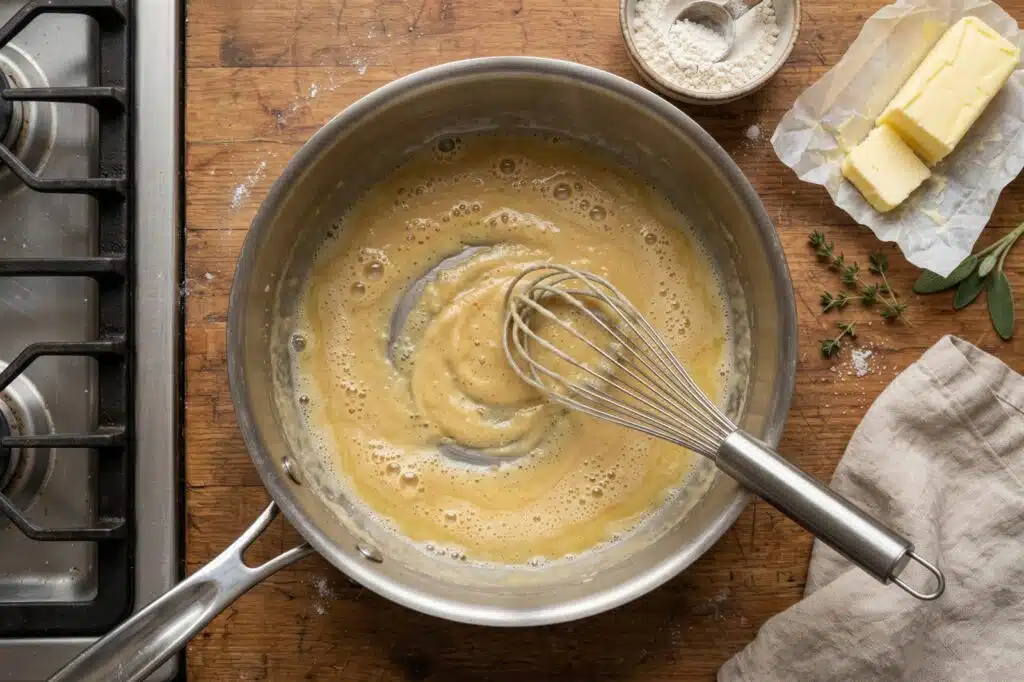
- Add the stock slowly. Pour in about 1 cup of warm stock, whisking hard until thick and smooth. Keep adding the remaining stock and pan juices 1/2 cup at a time, whisking after each addition.
- Simmer. Stir in the thyme, sage and onion powder, then bring to a gentle simmer for 8 to 10 minutes, stirring often, until the gravy coats the back of a spoon.

- Season at the end. Stir in the Worcestershire and cream if using. Taste, then add salt and pepper. Drippings are often salty, so do not salt early.
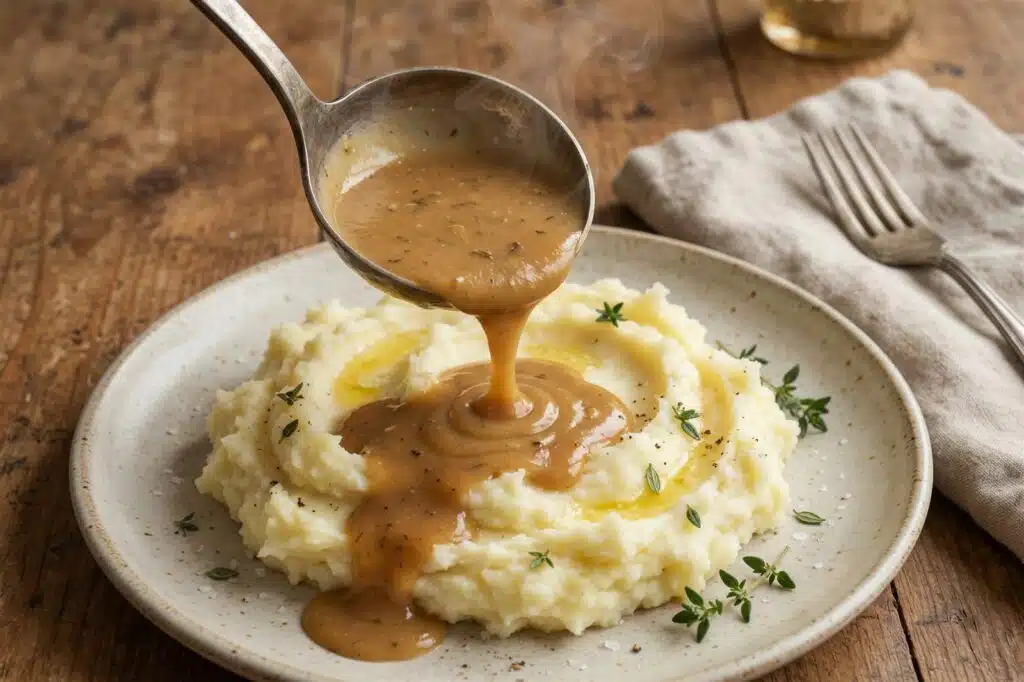
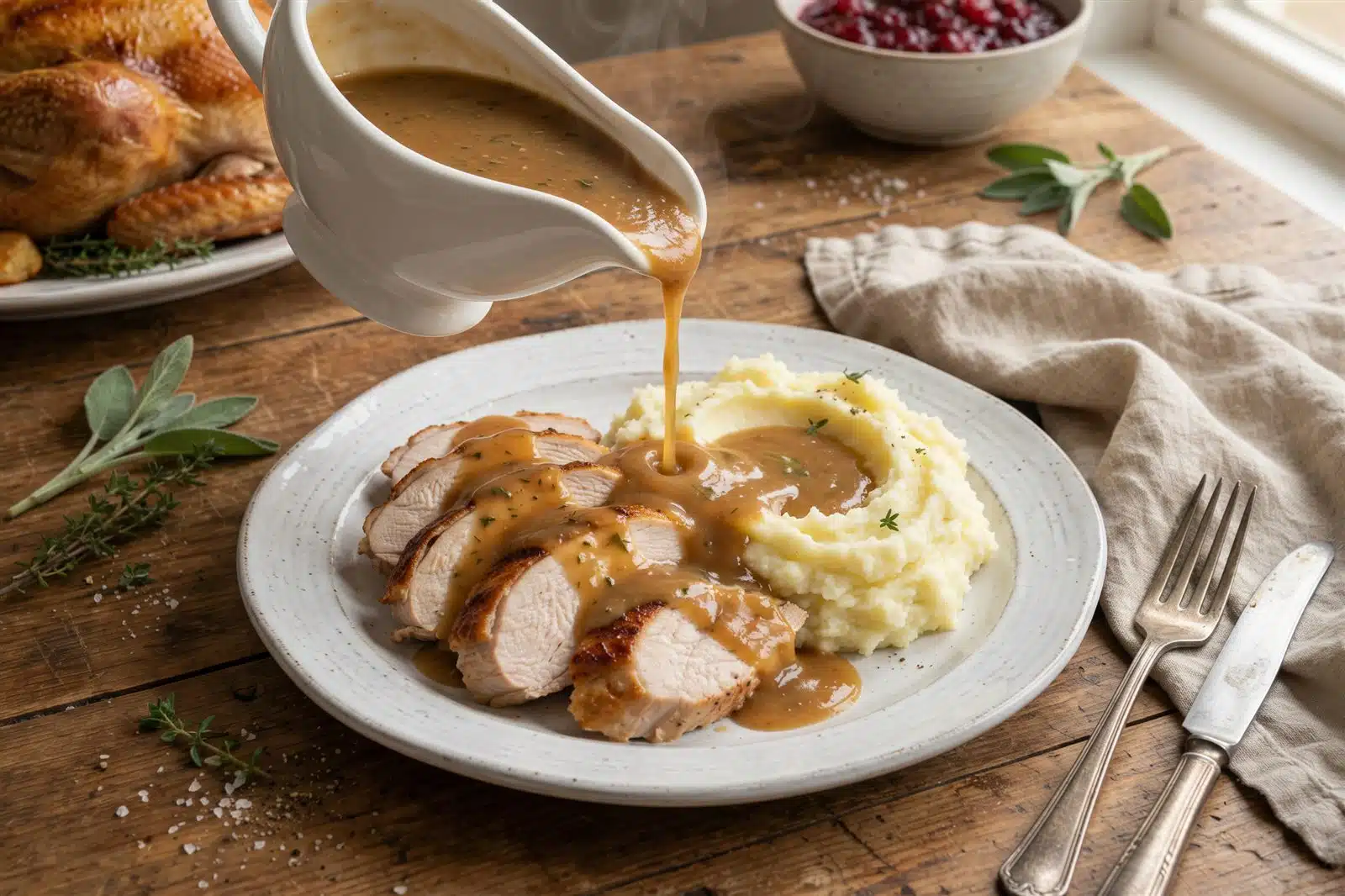
- Strain and serve. For a flawless texture, pour the gravy through a fine-mesh strainer. Serve it hot with turkey, mashed potatoes and stuffing.
Old-Fashioned Homemade Turkey Gravy
Ingredients
Method
- Pour the juices from the roasting pan into a fat separator or a glass measuring cup. Let them settle for 5 minutes, then spoon off 1/4 cup of the fat. Keep the dark juices underneath and add them to your stock.
- Warm the stock in a small pot over low heat so it is hot when it meets the roux. Cold stock is the most common cause of lumps.
- Heat the reserved fat (and the butter, if you need it) in a saucepan over medium heat until it shimmers. Sprinkle in the flour and whisk constantly for 2 to 3 minutes, until the roux smells nutty and turns light golden.
- Pour in about 1 cup of the warm stock, whisking hard, until the mixture is thick and smooth. Keep adding the remaining stock and the pan juices 1/2 cup at a time, whisking after each addition.
- Add the thyme, sage and onion powder. Bring to a gentle simmer and cook for 8 to 10 minutes, stirring often, until the gravy coats the back of a spoon.
- Stir in the Worcestershire sauce and the cream, if using. Taste, then season with salt and pepper. Turkey drippings can be salty, so season at the end.
- For a perfectly smooth finish, pour the gravy through a fine-mesh strainer. Serve hot over turkey, mashed potatoes and stuffing.
Notes
Tips for Perfect Homemade Turkey Gravy
- Use warm stock. It is the single best way to avoid lumps in homemade turkey gravy.
- Toast the roux. Two to three minutes of whisking cooks out the raw flour taste and adds a nutty flavor.
- Whisk while you pour. Add the first cup of stock a little at a time, whisking hard, then relax.
- Simmer, do not boil hard. A gentle simmer thickens the gravy without scorching it.
- Season last. Pan drippings and stock vary in saltiness, so taste before you add salt.
- Strain when in doubt. A fine-mesh strainer rescues any gravy that did not turn out perfectly smooth.
- Keep it warm. Hold the gravy in a small pot over the lowest heat and whisk in a splash of stock if it thickens.
Variations and Substitutions
Homemade turkey gravy without drippings
No roast, or not enough drippings? Melt 1/4 cup of butter instead, whisk in the flour, and use a flavorful turkey or chicken stock. Add a teaspoon of Worcestershire or soy sauce for color, and a pinch of poultry seasoning. The gravy will be a little lighter but still delicious. If you love gravy-based comfort food, you will also like our perfect homemade gravy and these country gravy potatoes.
Gluten-free homemade turkey gravy
Skip the flour and thicken the simmering stock with a slurry of 2 tablespoons of cornstarch and 3 tablespoons of cold water, cooking it for 2 minutes until glossy. You can also use sweet rice flour for the roux. Check that your stock and Worcestershire sauce are labelled gluten-free, and see the Celiac Disease Foundation guide to gluten-free foods if you are cooking for someone with celiac disease. Our gluten-free roux guide shows more ways to thicken sauces.
More flavor ideas
- Mushroom gravy: sauté sliced mushrooms in the butter before adding the flour.
- Herb-forward: stir in a spoonful of chopped fresh parsley and a sprig of rosemary while it simmers.
- Extra rich: finish with a tablespoon of cold butter whisked in off the heat.
- Savory and dark: add a teaspoon of soy sauce or a little kitchen bouquet for a deeper color.
- Make-ahead gravy: use roasted turkey wings or necks to make a stock a few days early.
What to Serve with Homemade Turkey Gravy
Pour this homemade turkey gravy over sliced roast turkey, creamy mashed potatoes, stuffing and warm rolls. It is also great on biscuits, roasted vegetables and leftover turkey sandwiches. For the rest of your holiday table, try our slow cooker chicken and stuffing, these soft gluten-free dinner rolls and an easy gluten-free pumpkin pie for dessert.
How to Store and Reheat Homemade Turkey Gravy
- Refrigerate: cool the gravy, then store it in an airtight container for up to 4 days.
- Freeze: freeze in small containers for up to 3 months. Thaw overnight in the fridge.
- Reheat: warm it in a saucepan over low heat, whisking often, and add a splash of stock to loosen it. Do not boil it hard.
- Make ahead for the holidays: make the gravy a day or two early with stock and herbs, then whisk in the fresh pan drippings when the turkey comes out.
- Food safety: reheat leftovers until they are steaming hot. For poultry, the USDA safe minimum internal temperature is 165°F (74°C).
Common Mistakes to Avoid
- Adding cold stock to hot roux, which causes lumps.
- Pouring in all the stock at once instead of a little at a time.
- Not cooking the roux long enough, so the gravy tastes of raw flour.
- Salting too early, before you know how salty the drippings are.
- Skipping the strainer when the gravy is not perfectly smooth.
Frequently Asked Questions About Homemade Turkey Gravy
Can I make homemade turkey gravy without drippings?
Yes. Melt 1/4 cup of butter, whisk in the flour, and use a good turkey or chicken stock. Add a teaspoon of Worcestershire or soy sauce for color and a pinch of poultry seasoning for flavor. It will not be quite as deep as gravy made from drippings, but it is still rich and savory.
How do I fix lumpy homemade turkey gravy?
Pour the gravy through a fine-mesh strainer, or blend it for a few seconds with an immersion blender. To prevent lumps next time, use warm stock and add it slowly while whisking.
How do I thicken or thin homemade turkey gravy?
To thicken, simmer it a few minutes longer or whisk in a slurry of 1 tablespoon cornstarch and 2 tablespoons cold water. To thin it, whisk in a little warm stock, a splash at a time, until it reaches the texture you like.
Can I make homemade turkey gravy ahead of time?
Yes. Make it up to 4 days ahead and refrigerate it. Reheat over low heat, whisking often, and add a splash of stock because it thickens as it cools. You can also freeze it for up to 3 months.
How do I make homemade turkey gravy gluten-free?
Skip the flour and thicken the simmering stock with a cornstarch slurry, or use sweet rice flour for the roux. Check that your stock and Worcestershire sauce are labelled gluten-free.
Why is my turkey gravy too salty?
Drippings and store-bought stock can both be salty. Add unsalted stock or a splash of water to dilute it, and always season at the end. A little cream or a peeled raw potato simmered in the gravy also softens the salt.
Final Thoughts
Good homemade turkey gravy is mostly patience: a toasted roux, warm stock and a gentle simmer. Once you have made it this way, you will never go back to the packet. Make it as written the first time, then adjust the herbs and richness to match your table. If you try this homemade turkey gravy, leave a comment below and tell us how it turned out. For more cozy comfort food, browse our homemade recipes.